Materials
Cosmetic packaging materials compared
Material selection follows the formula first and the brand second. Each guide below covers characteristics, advantages, limitations, typical applications, compatibility, sustainability, decoration options and the skincare products it suits.
| Material | Density | Clarity | Chemical resistance | Heat | Code |
|---|---|---|---|---|---|
| PET | 1.33–1.38 | Clear | Good to alcohol; limited to oils | ~60–70 °C | 1 |
| PP | 0.90–0.91 | Translucent | Excellent | ~100–120 °C | 5 |
| HDPE | 0.94–0.96 | Opaque | Excellent | ~70–90 °C | 2 |
| LDPE/LLDPE | 0.91–0.94 | Translucent | Good | ~70–90 °C | 4 |
| Acrylic | ~1.18 | Very high | Poor to alcohol and oils | ~70–80 °C | 7 |
| PCR (rPET/rPP/rHDPE) | As base polymer | As base polymer | As base polymer | As base polymer | As base |
| Bio-based PE | 0.92–0.95 | Opaque–translucent | As PE | As PE | 2 / 4 |
PET
Polyethylene terephthalate
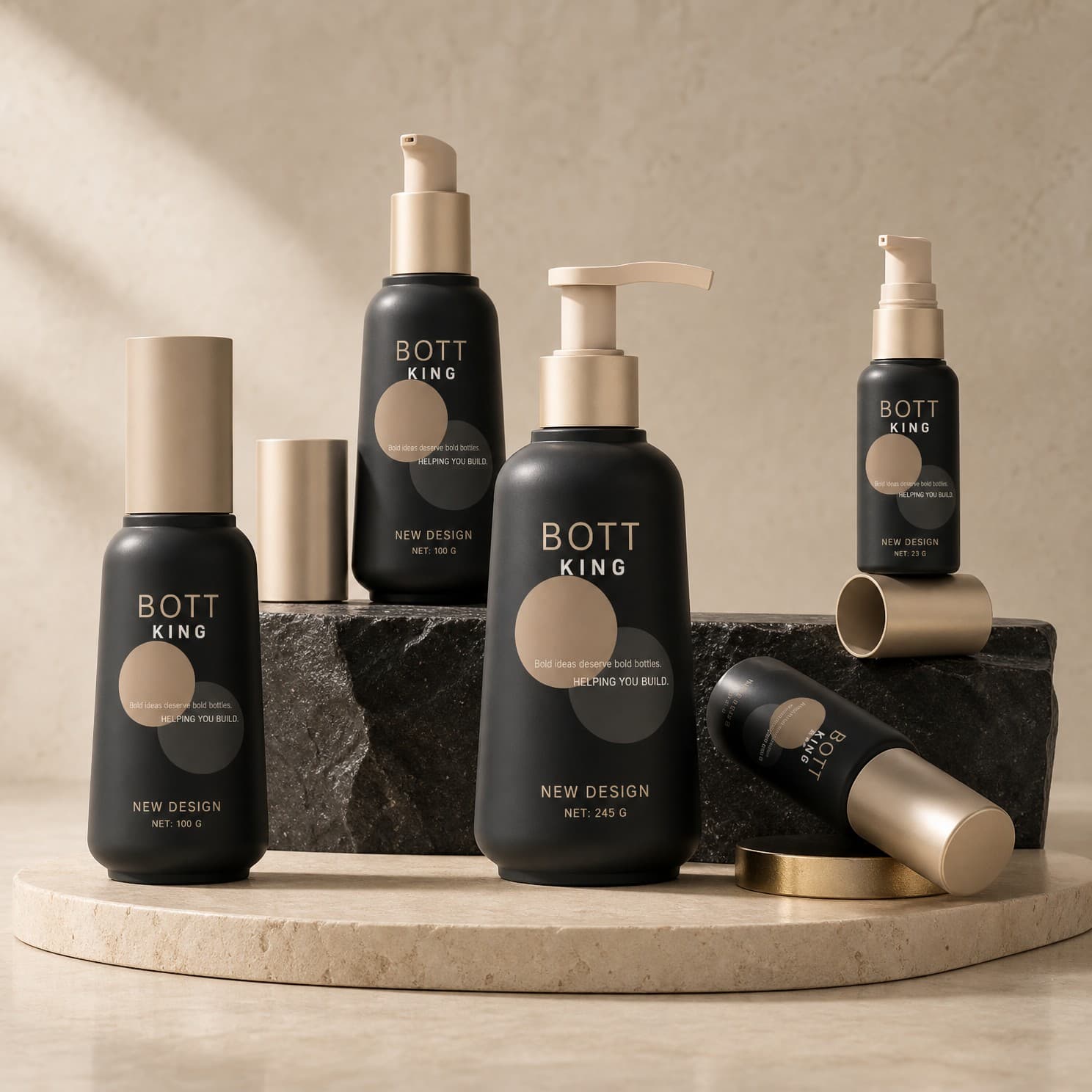
PET is a clear, strong, lightweight plastic with high clarity and good resistance to alcohols and water-based formulas, which makes it the standard material for transparent cosmetic bottles.
Material guide →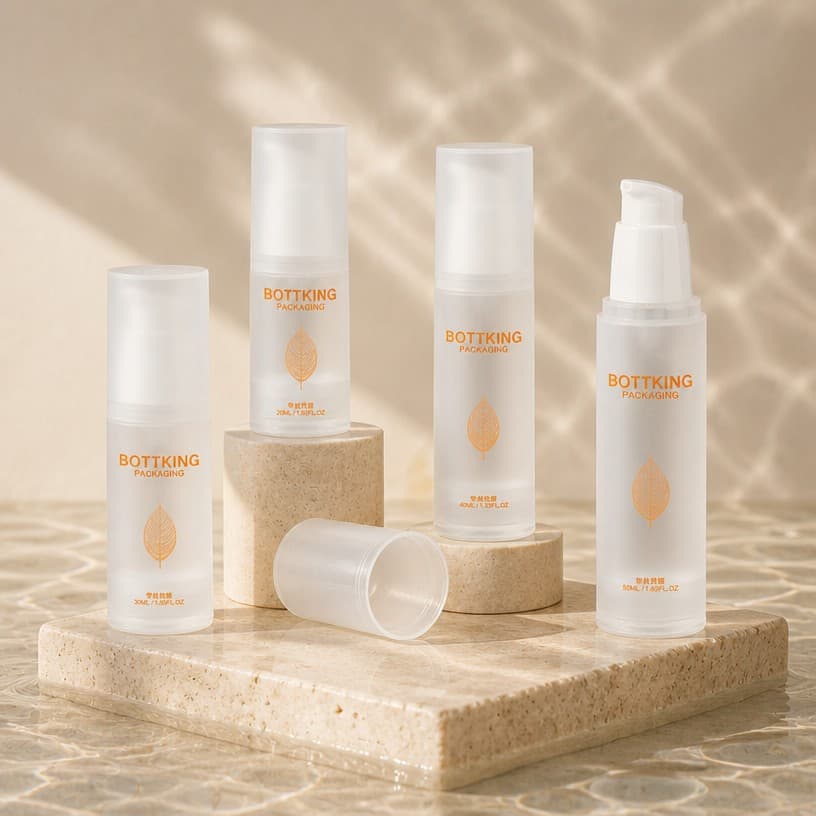
PP
Polypropylene
PP is a translucent, chemically resistant plastic that tolerates acids, alcohols and hot filling, and can be paired with PP closures to form a mono-material recyclable pack.
Material guide →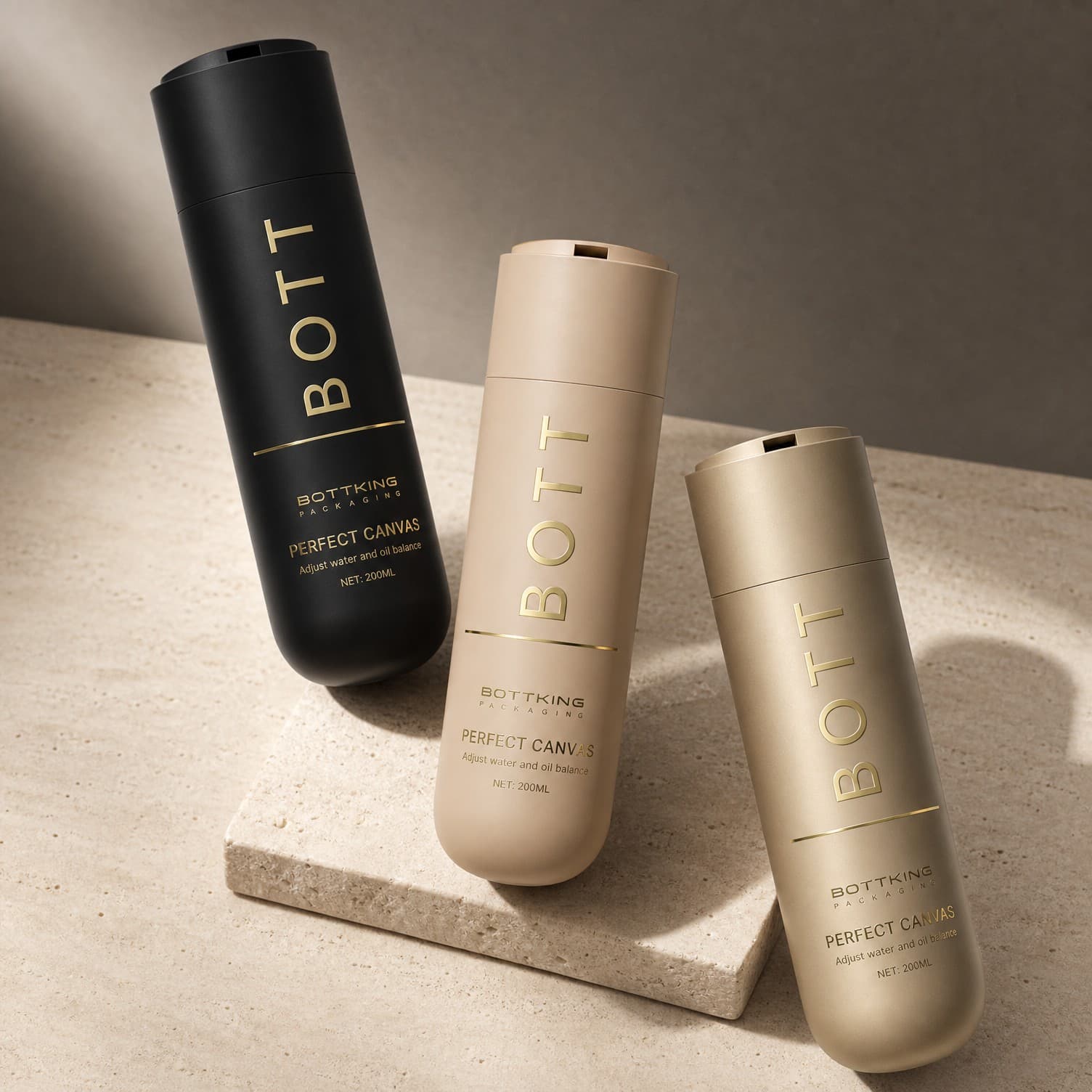
HDPE
High-density polyethylene
HDPE is an opaque, tough, chemically resistant polyethylene that is the most cost-effective cosmetic plastic above 250 ml and the most widely available recycled-content resin.
Material guide →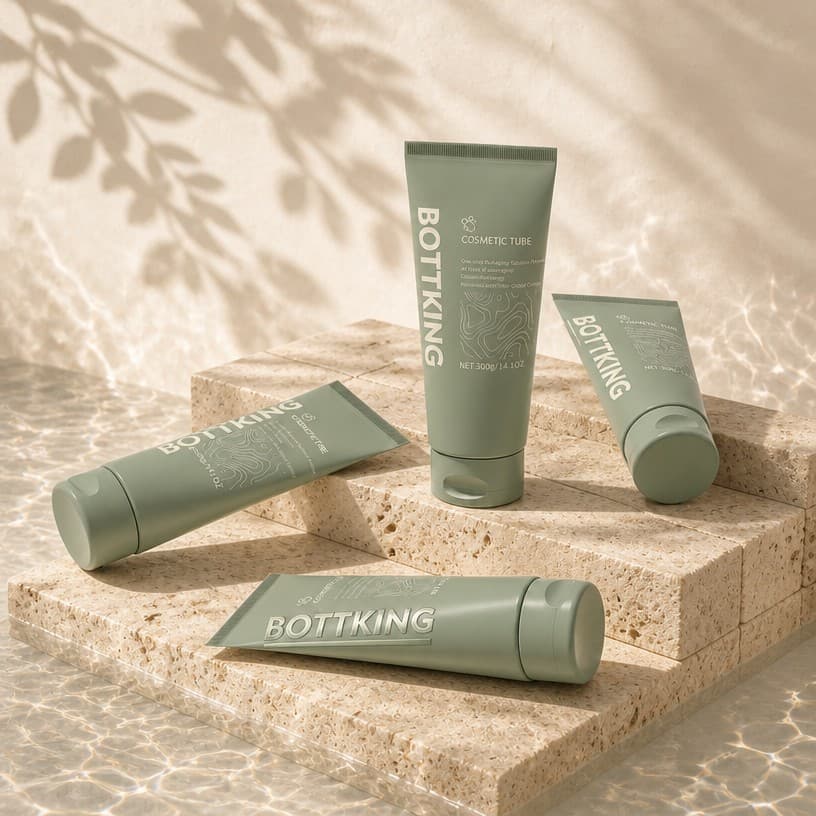
PE
Polyethylene (LDPE, LLDPE and blends)
PE is the flexible side of the polyethylene family: LDPE and LLDPE are used for squeeze tubes, soft closures, dropper bulbs and liners, where flexibility and sealing matter more than rigidity.
Material guide →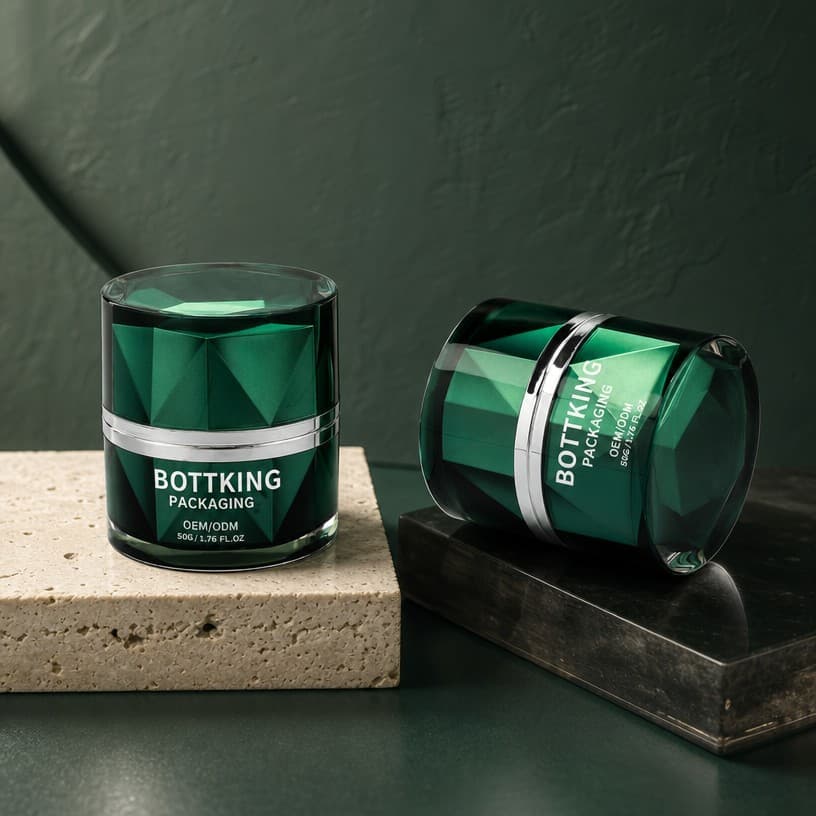
Acrylic
Acrylic (PMMA, SAN and AS copolymers)
Acrylic (PMMA and SAN/AS) is the clearest and most glass-like cosmetic plastic, used for prestige jars, caps, thick-wall bottles and decorative outer components where weight and optical clarity drive value.
Material guide →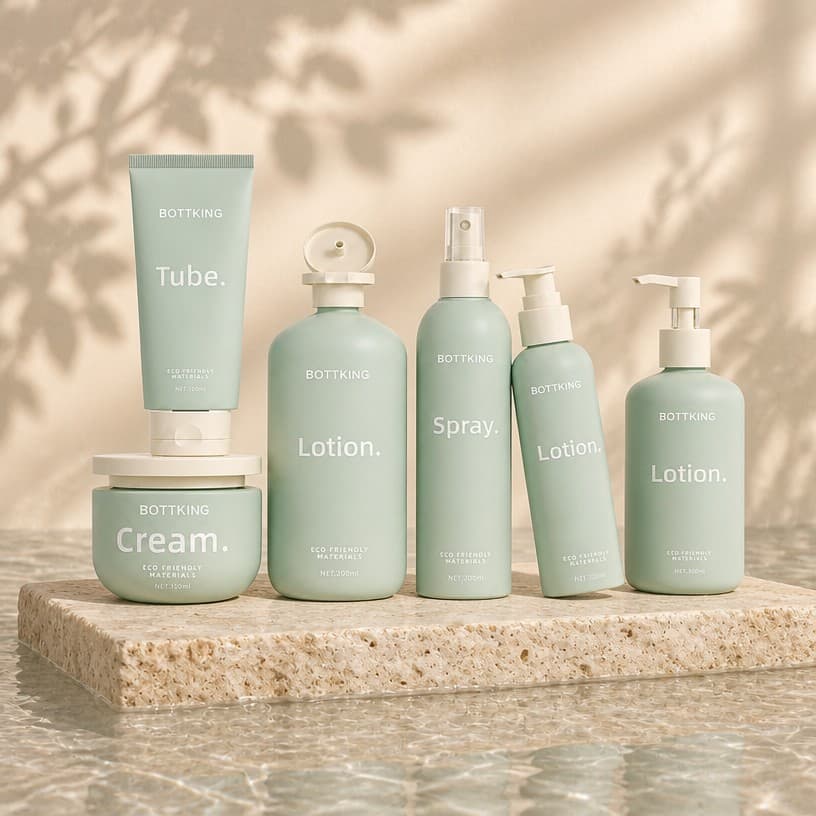
PCR plastic
Post-consumer recycled plastic (rPET, rPP, rHDPE)
PCR plastic is packaging resin made from post-consumer recycled material. It lets a brand reduce virgin plastic per pack, with the recycled percentage verified against the resin grade rather than claimed generically.
Material guide →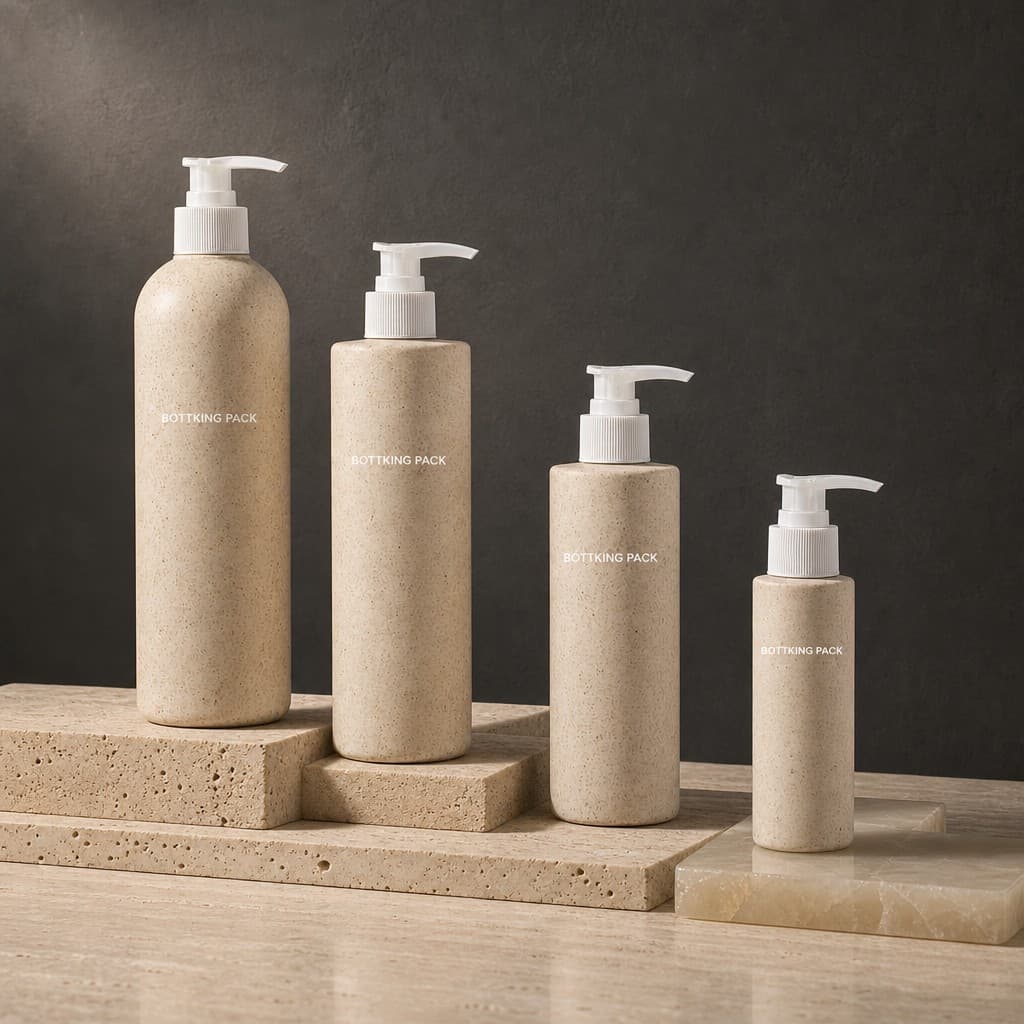
Recycled plastic
Recycled plastic (post-consumer and post-industrial)
Recycled plastic covers post-consumer recycled (PCR) and post-industrial recycled (PIR) resin. Both reduce virgin material use, but only post-consumer content supports a circularity claim, so the distinction must be stated precisely.
Material guide →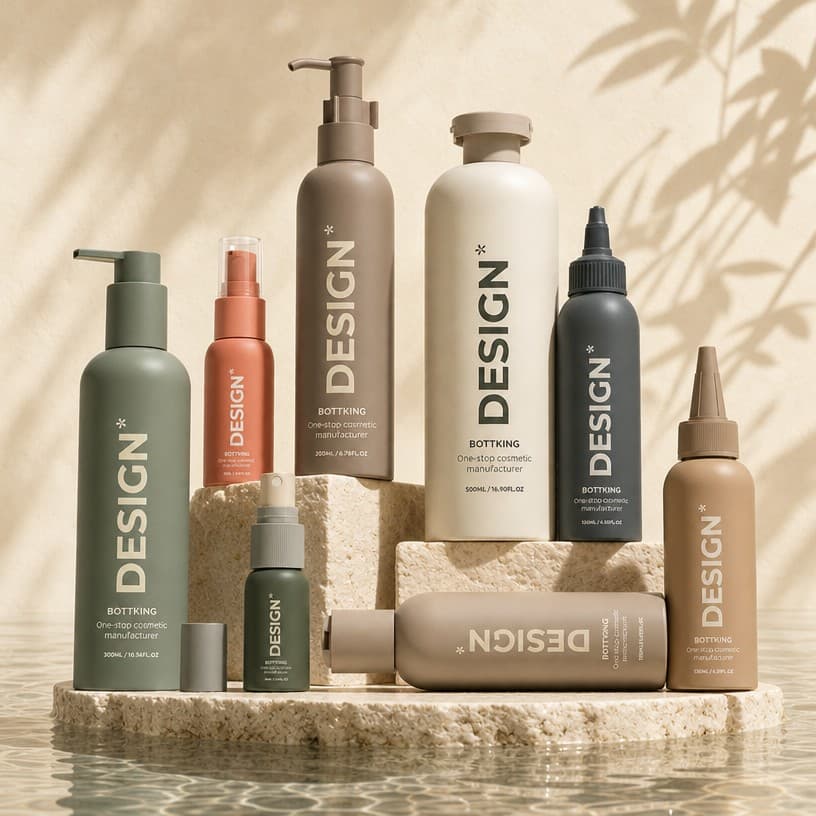
Bio-based plastic
Bio-based plastics (bio-PE, bio-PET, PLA and PEF)
Bio-based plastics are made from renewable feedstocks such as sugarcane or corn. Bio-PE and bio-PET are drop-in replacements for conventional PE and PET; biodegradability is a separate property that most bio-based packaging does not have.
Material guide →Frequently asked questions
Which material is best for plastic skincare packaging?
It depends on the formula: PP for acidic, alcoholic or hot-filled products, PET for clear water-based formats, HDPE for opaque volume formats with recycled content, and acrylic for prestige jars where the formula sits in an inner cup.
Can cosmetic packaging be made from recycled plastic?
Yes. rHDPE and rPET are available from 25–100% post-consumer content and rPP from 30–100%, depending on grade and colour, with certificates on certified grades.
How do I test formula compatibility with a material?
Fill the actual pack to the production level, close at the specified torque and store for 4–12 weeks at 40 °C, then check weight loss, deformation, colour change, closure function and odour.
Is acrylic packaging recyclable?
Acrylic is resin code 7 and is not collected in most municipal systems, so it should not be described as recyclable. Its sustainability route is reuse: refillable acrylic shells with replaceable inner cups.
Still have a question? Talk to a packaging expert.
Not sure which material suits your formula?
Send your format, capacity, quantity and decoration requirements. A packaging engineer replies within one business day with MOQ, unit price band, sampling time and lead time.
No account required · NDA available · Quote replies within one business day (Mon–Sat, GMT+8)