Material guide
PET Cosmetic Packaging
Polyethylene terephthalate
PET is a clear, strong, lightweight plastic with high clarity and good resistance to alcohols and water-based formulas, which makes it the standard material for transparent cosmetic bottles.
At a glance
- Best for
- Lotion bottles · Serum bottles · Toner bottles
- Applications
- Clear lotion, toner and cleanser bottles (30–500 ml) · Thick-wall serum-look bottles with droppers or pumps · Transparent jars for masks, scrubs and gels
- Key advantage
- Best clarity-to-cost ratio in cosmetic packaging · Low pack weight reduces freight cost and material use
- Decoration
- Screen printing up to six colours on cylindrical surfaces · UV digital printing for short runs and multi-variant artwork
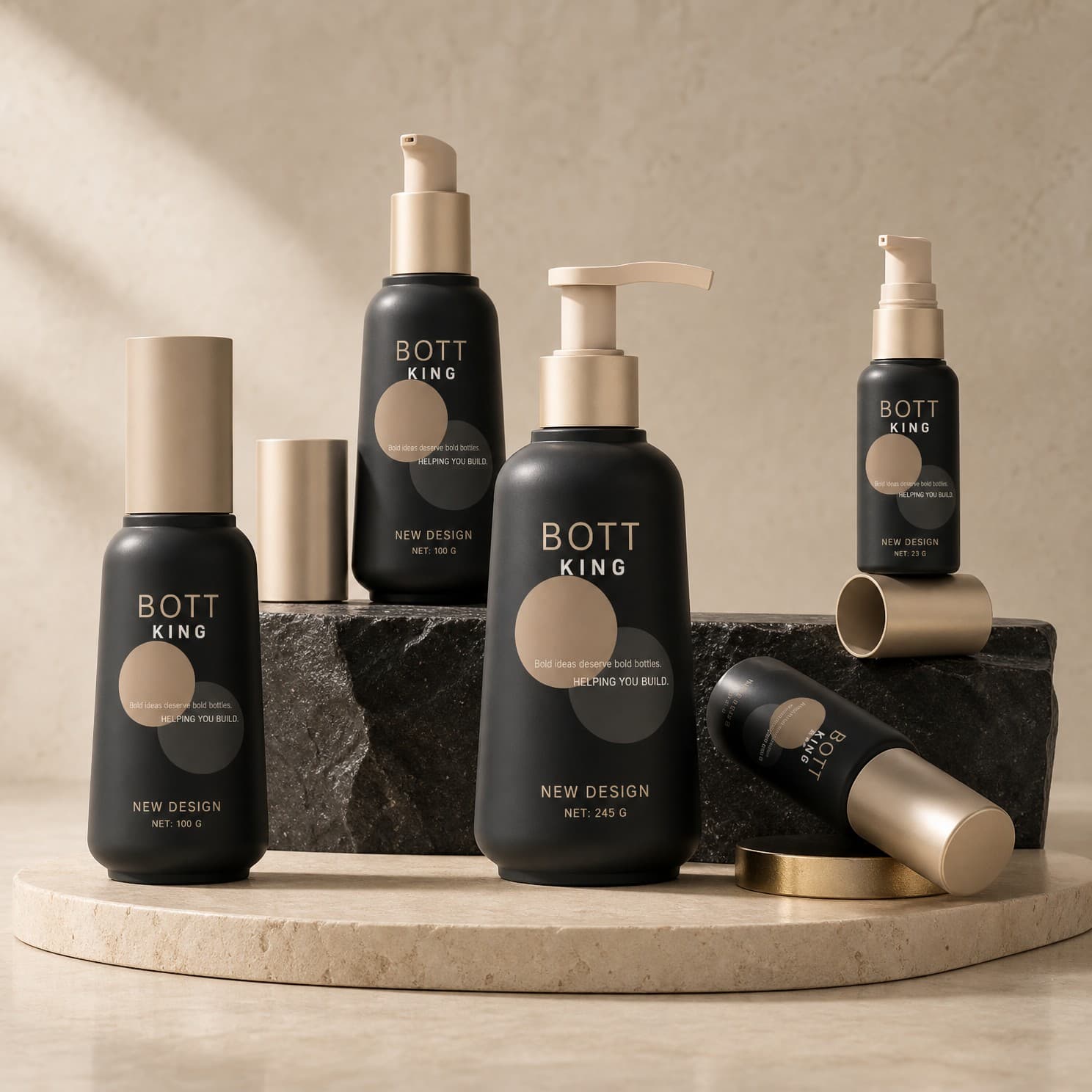
What is PET used for in cosmetics?
PET is produced by polycondensation and processed into packaging by injection blow moulding (bottles) or injection moulding (jars and thick-wall parts). It is the most recycled plastic in the world by volume, and recycled PET (rPET) is widely available for cosmetic use.
Its strength-to-weight ratio is the reason a 200 ml PET lotion bottle can weigh under 20 g while still surviving transport, and its clarity is why brands use it when the product colour is part of the sell.
| Property | Value |
|---|---|
| Density | 1.33–1.38 g/cm³ |
| Clarity | High (clear to translucent) |
| Max service temperature | Around 60–70 °C (grades vary) |
| Alcohol resistance | Good up to moderate concentrations |
| Oil and solvent resistance | Limited — compatibility test recommended |
| Recycling code | 1 (PET) |
| Typical wall thickness | 0.4–1.5 mm bottles; 1.5–4 mm thick-wall jars |
Material characteristics
- Clear, glass-like appearance with high gloss
- High tensile strength and impact resistance for its weight
- Precise neck finishes from injection blow moulding (±0.2 mm typical)
- Good barrier to oxygen and moisture compared with PP and HDPE
- Available in virgin and post-consumer recycled (rPET) grades
- Mouldable into thick-wall bottles and jars for a premium hand-feel
Applications
- Clear lotion, toner and cleanser bottles (30–500 ml)
- Thick-wall serum-look bottles with droppers or pumps
- Transparent jars for masks, scrubs and gels
- Cosmetic and body care bottles where visibility of the fill matters
- Travel-size formats where clarity and low weight both matter
Advantages
- Best clarity-to-cost ratio in cosmetic packaging
- Low pack weight reduces freight cost and material use
- Strong enough for thin walls at large capacities (200–500 ml)
- Excellent surface for printing, hot stamping and coating
- Widely collected and recycled as resin code 1
- rPET availability supports recycled-content claims with documentation
Limitations to plan for
- Not suited to strong solvents, some essential oils and high-concentration fragrance without a compatibility test
- Softens at elevated temperatures — not suitable for hot filling
- Gas and light barrier is lower than glass or fluorinated constructions
- Can stress-crack under certain surfactant and oil combinations
- Recycled grades may show colour variation at high recycled percentages
Formula compatibility
- Water-based lotions, toners and cleansers: good
- Alcohol-based toners up to moderate concentration: good, test recommended
- Mineral-oil and silicone emulsions: generally good
- High-concentration essential oils: caution — test on the actual pack
- Strong acids and alkaline formulas (pH > 9): test recommended; consider PP
- Sunscreen with solvent-based UV filters: test recommended; consider HDPE or PP
Sustainability and end of life
- PET is the most recycled plastic stream globally, with well-established collection in many markets
- rPET grades are available from 30% to 100% recycled content; certified grades carry documented recycled percentages
- Single-material PET bottles with PET or mono-material closures sort well in existing streams
- Lightweighting (thin walls, optimised shoulder geometry) reduces material per unit
- Full-body shrink sleeves can interfere with sorting — direct printing or a front-and-back label is preferable
- PET has a lower density of the common cosmetic plastics only after PP and PE; pack weight, not material alone, drives the footprint
Decoration options
- Screen printing up to six colours on cylindrical surfaces
- UV digital printing for short runs and multi-variant artwork
- Hot stamping for logos and metallic accents
- Frosted, gradient and matte spray coating
- Soft-touch and rubberised top coats
- Wrap, front-and-back and shrink-sleeve labelling
Suitable skincare products
- Lotion bottles
- Serum bottles
- Toner bottles
- Cleanser bottles
- Clear cosmetic jars
- Travel cosmetic bottles
Why a brand should choose PET
- Choose PET when clarity is part of the product story and the formula is water-based or mildly alcoholic
- Choose PET when weight and freight cost matter but glass-like appearance is still required
- Choose PET when you need a wide choice of stock moulds with fast sampling
- Choose PP instead for acid, alcohol-heavy or hot-filled formulas and for mono-material recyclable design
Frequently asked questions
Is PET safe for skincare packaging?
Yes. Cosmetic-grade PET is used for billions of skincare packs and complies with food-contact style requirements for the relevant contact conditions. The limitation is formula compatibility, not safety: aggressive solvents, some essential oils and very high or low pH formulas are better in PP or HDPE.
Can PET containers be recycled?
Yes, PET is resin code 1 and is the most widely collected and recycled plastic packaging stream. Recyclability in practice depends on your market's collection system and on decoration choices — labels, sleeves and heavy adhesives reduce sortability.
Does recycled PET look different from virgin PET?
High recycled content can introduce a slight grey or green-yellow tint, and colour consistency is harder to guarantee at 100% rPET. We supply rPET samples for approval against your colour reference before production.
Is PET or PETG better for thick-wall bottles?
PETG is clearer and easier to mould in very thick sections, so it is common for premium serum-style bottles. PET holds tighter neck tolerances and is cheaper; choose PETG when optical clarity and wall thickness are the priority.
What wall thickness should a PET bottle have?
Retail bottles generally run 0.5–1.2 mm; larger formats can be thinner, and small premium bottles thicker (1.5 mm and above). We confirm thickness against top-load requirements and carton stacking.
Still have a question? Talk to a packaging expert.
Continue researching
PET packaging quotes and samples
Tell us the format, capacity, quantity and any recycled-content target and we will confirm which PET grade fits your formula, plus MOQ, sampling and lead time.
No account required · NDA available · Quote replies within one business day (Mon–Sat, GMT+8)