Bottking
Cosmetic Jars
We manufacture plastic cosmetic jars from 5 ml to 500 ml in single-wall, double-wall, acrylic and airless constructions, in PP, PET and PCR materials with gasketed lids and full-surface decoration.
Key topics
- •Jar constructions compared
- •Lid and gasket choices
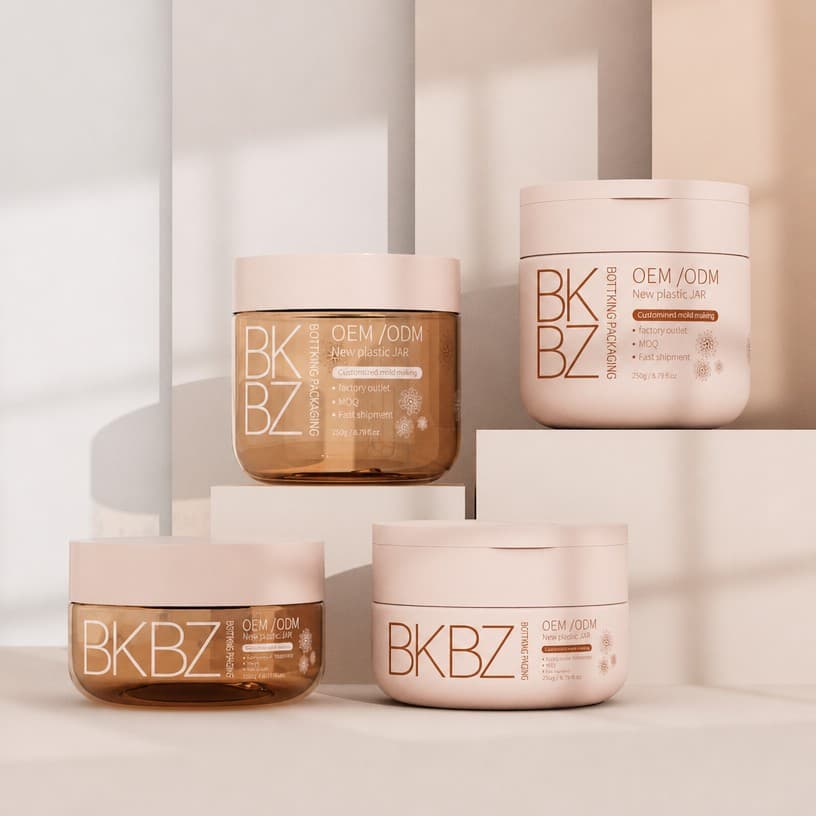
Jars are the natural format for rich, shape-holding creams and the format with the largest printable surface. The construction decision — single-wall, double-wall, acrylic or airless — sets cost, weight, protection and the perceived price point.
Fill volume is 90–95% of nominal capacity, so capacity is chosen from the fill weight and formula density rather than from the label size alone. That single point prevents most jar-related filling problems.
Range
Cosmetic Jars we manufacture
Each page carries specifications, MOQ, sampling and lead times, and links to the materials and decoration options that apply.
Plastic Cosmetic Jars
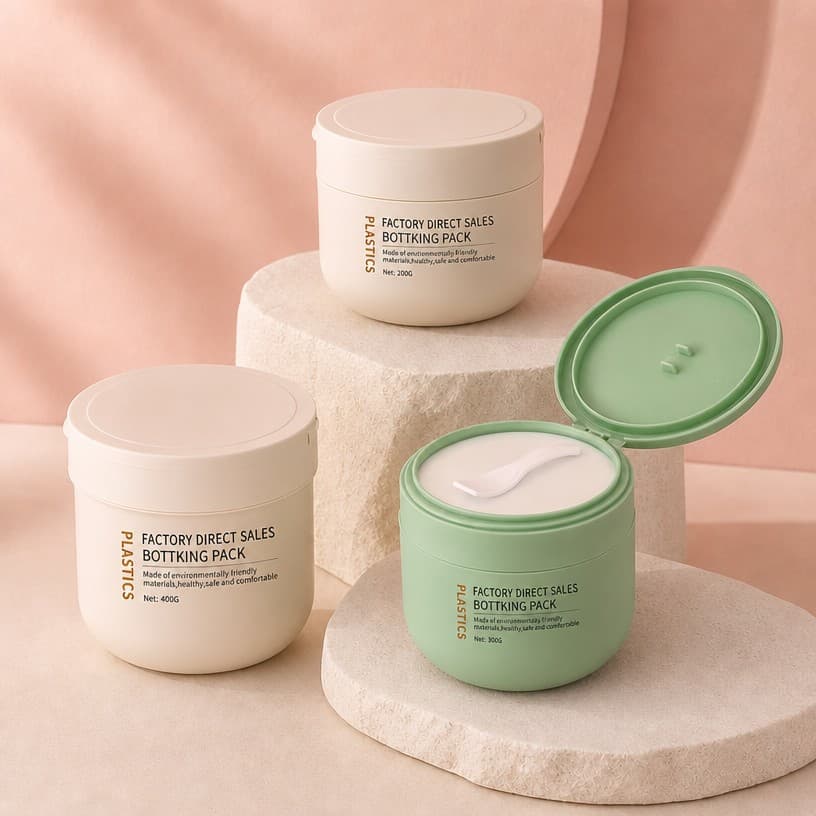
Plastic cosmetic jars are wide-mouth containers closed with a screw or press-fit lid, used for creams, butters, balms and thick masks, available in single-wall, double-wall and refillable constructions from 5 ml to 500 ml.
5 ml · 10 ml · 15 ml · 20 ml · more
View range →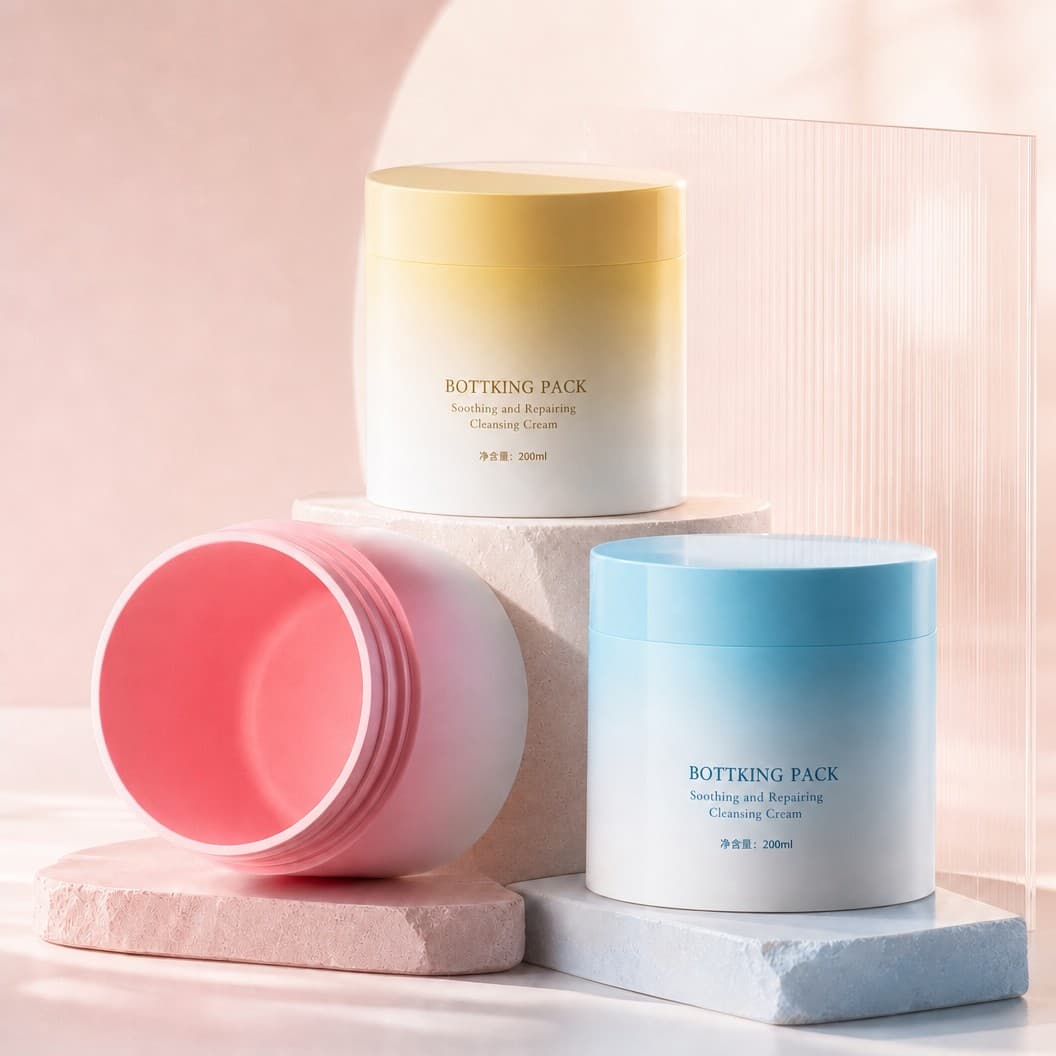
PP Cosmetic Jars
PP cosmetic jars are the most widely used cream jar because polypropylene resists oils, acids and alcohols, tolerates hot filling, and can be paired with a PP lid as a mono-material recyclable pack.
10 ml · 15 ml · 20 ml · 30 ml · more
View range →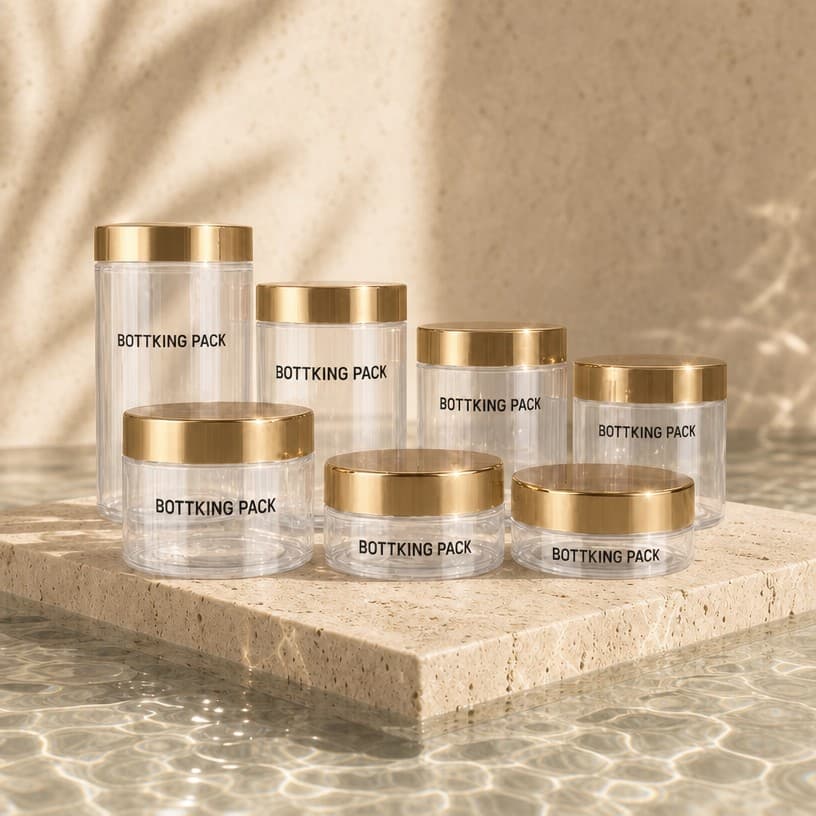
PET Cosmetic Jars
PET cosmetic jars are clear, glossy and inexpensive to mould, so they are used when the product's own colour and texture are part of the sell — gels, masks, scrubs and body butters.
20 ml · 30 ml · 50 ml · 60 ml · more
View range →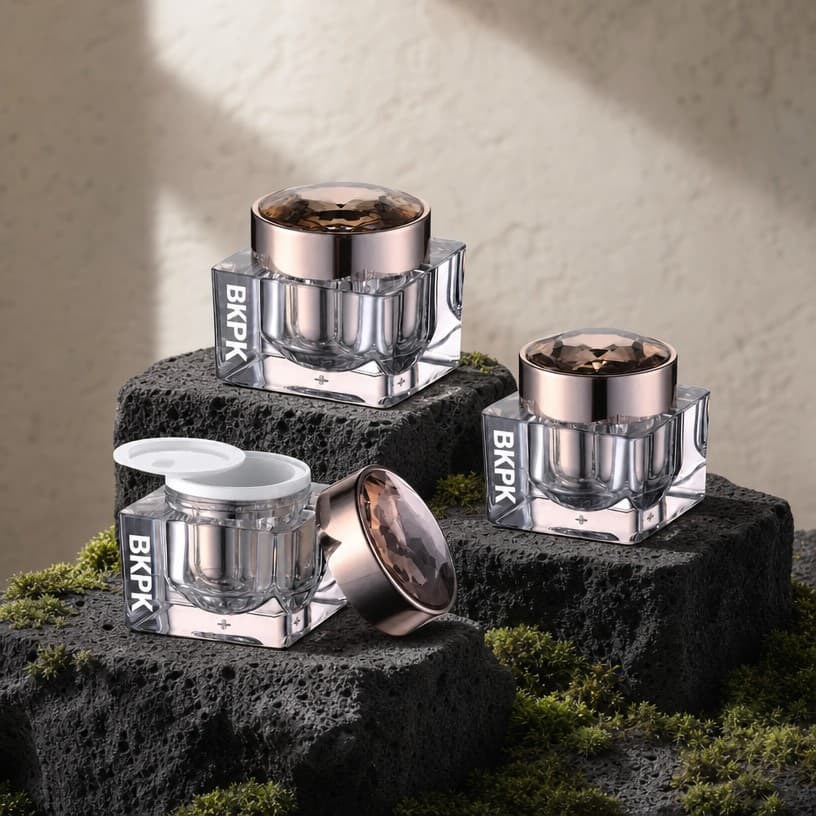
Acrylic Cosmetic Jars
Acrylic cosmetic jars use thick AS/SAN walls and heavy bases to mimic glass weight and clarity while staying shatter-resistant, which makes them the standard choice for premium and prestige cream launches.
15 ml · 20 ml · 30 ml · 50 ml · more
View range →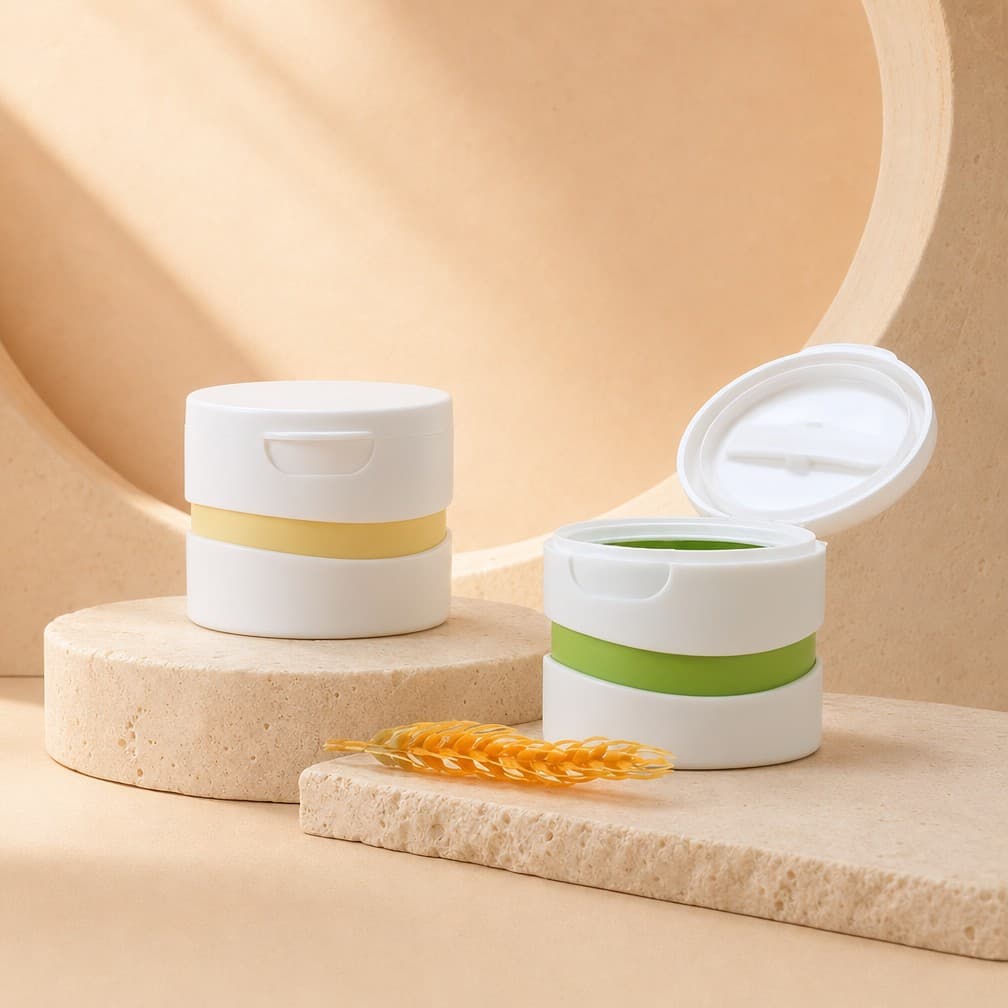
Cream Jars
Cream jars are wide-mouth plastic containers for emulsified products such as moisturiser, night cream, butter and mask, normally supplied in 30–100 ml for face and 100–250 ml for body formats.
15 ml · 20 ml · 30 ml · 50 ml · more
View range →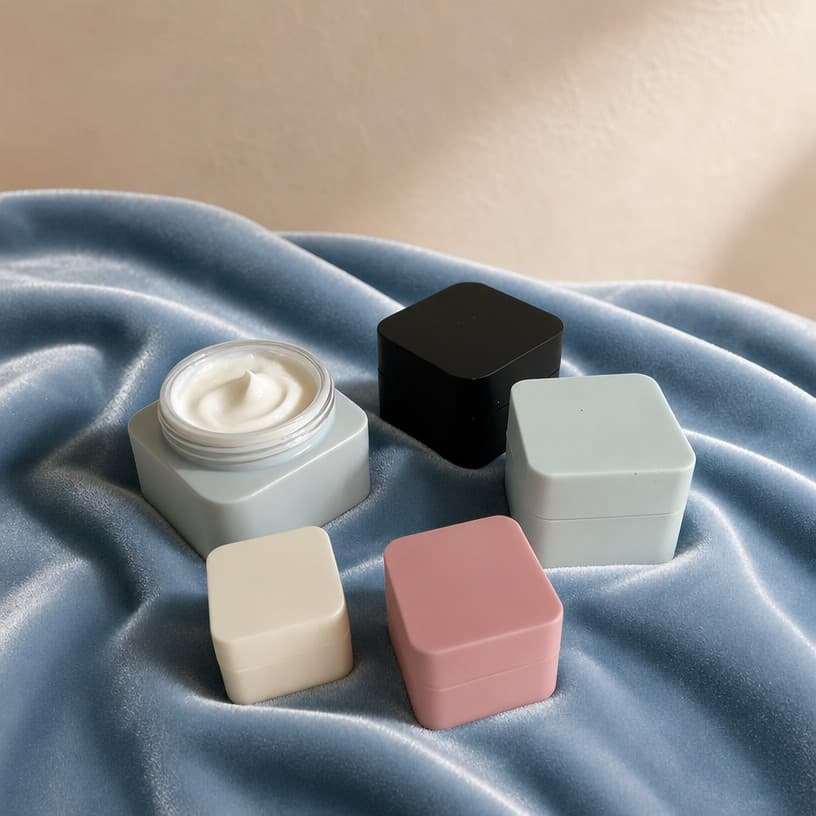
Face Cream Jars
Face cream jars are the 15–60 ml high-touch containers used for moisturisers and night creams, where the pack is part of the daily ritual and the lid is often the most visible brand surface.
15 ml · 20 ml · 30 ml · 50 ml · more
View range →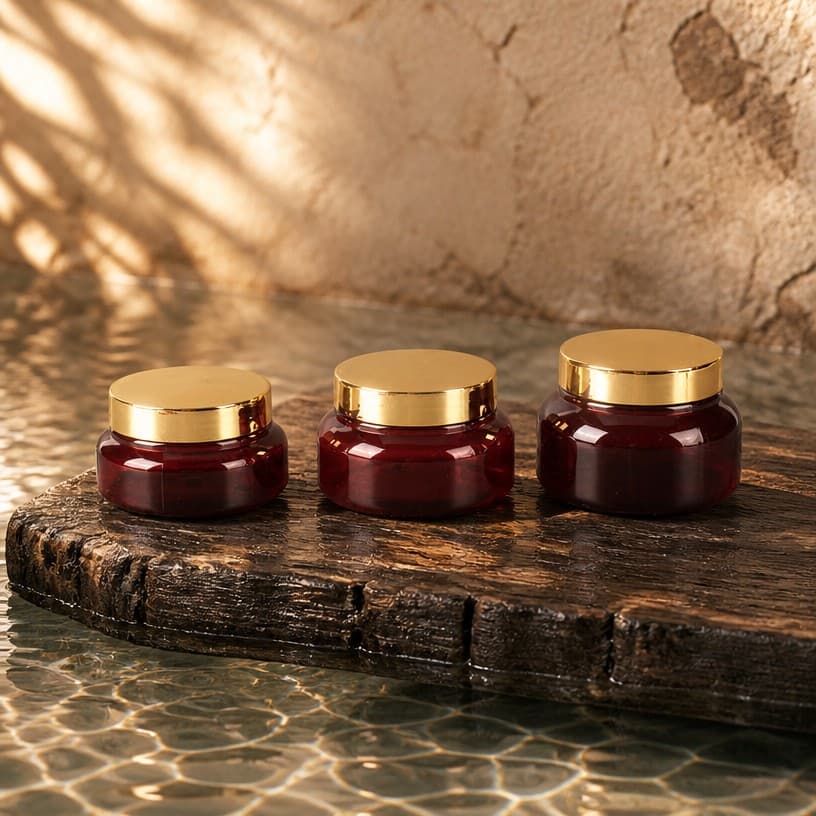
Eye Cream Jars
Eye cream jars are small-format containers of 5–20 ml, often supplied with a spatula, airless pump or fine-tip dispenser because precise, hygienic dosing matters more around the eye area.
5 ml · 8 ml · 10 ml · 15 ml · more
View range →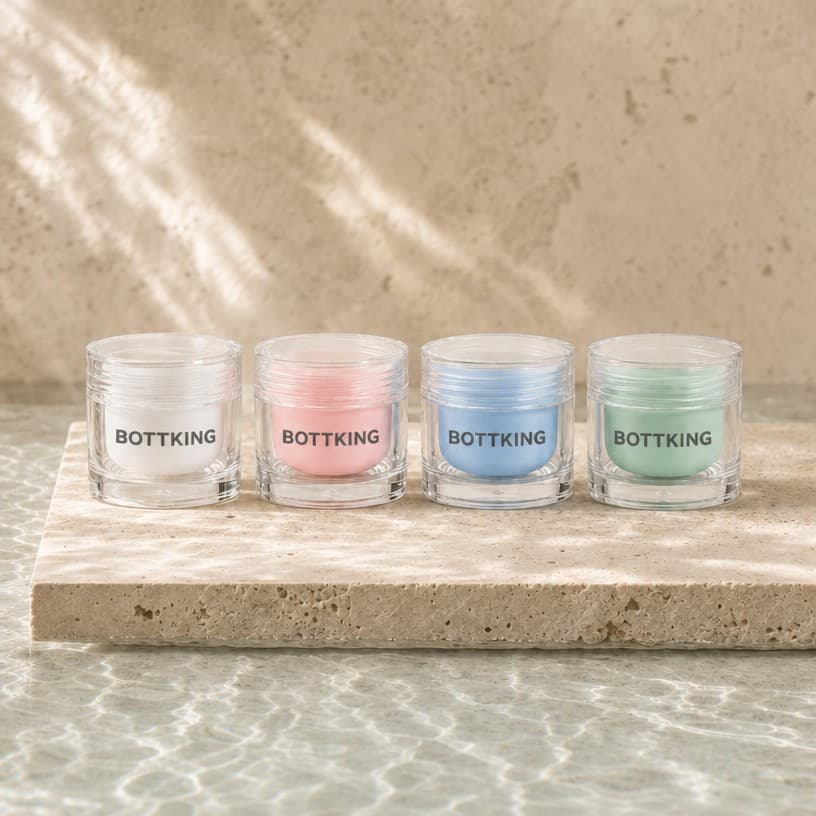
Double Wall Jars
A double-wall jar uses a separate outer shell over an inner cup, which hides the inner container, adds visual thickness and lets the outer appearance be changed without touching the formula-contact material.
15 ml · 20 ml · 30 ml · 50 ml · more
View range →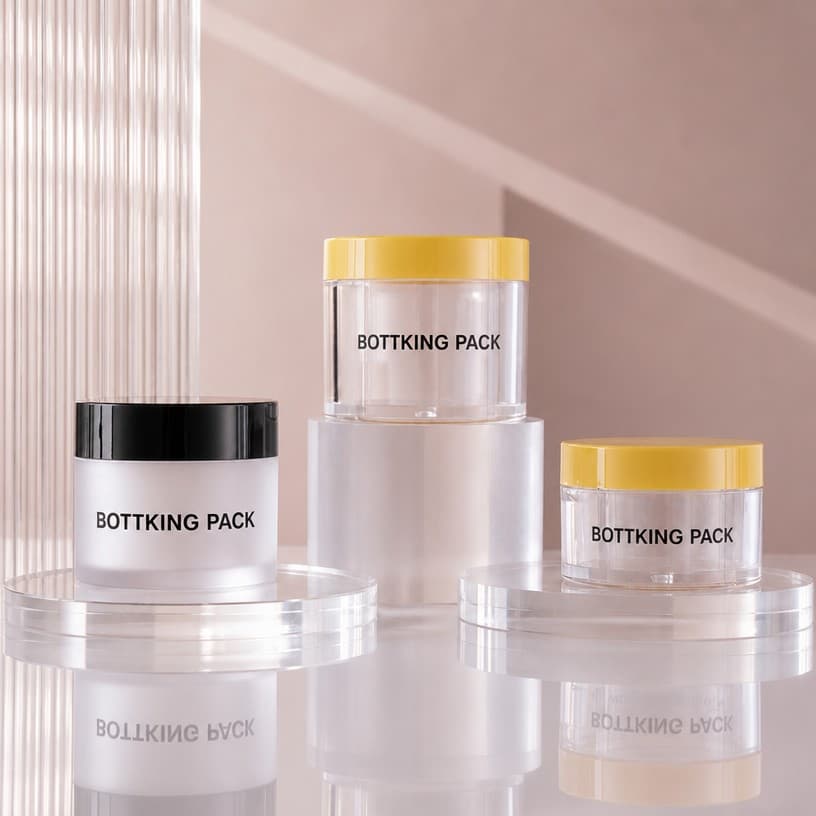
Single Wall Jars
A single-wall jar is one moulded body and one lid, which gives the lowest unit cost and the least plastic per unit, and is the simplest structure to qualify as a mono-material recyclable pack.
5 ml · 10 ml · 15 ml · 20 ml · more
View range →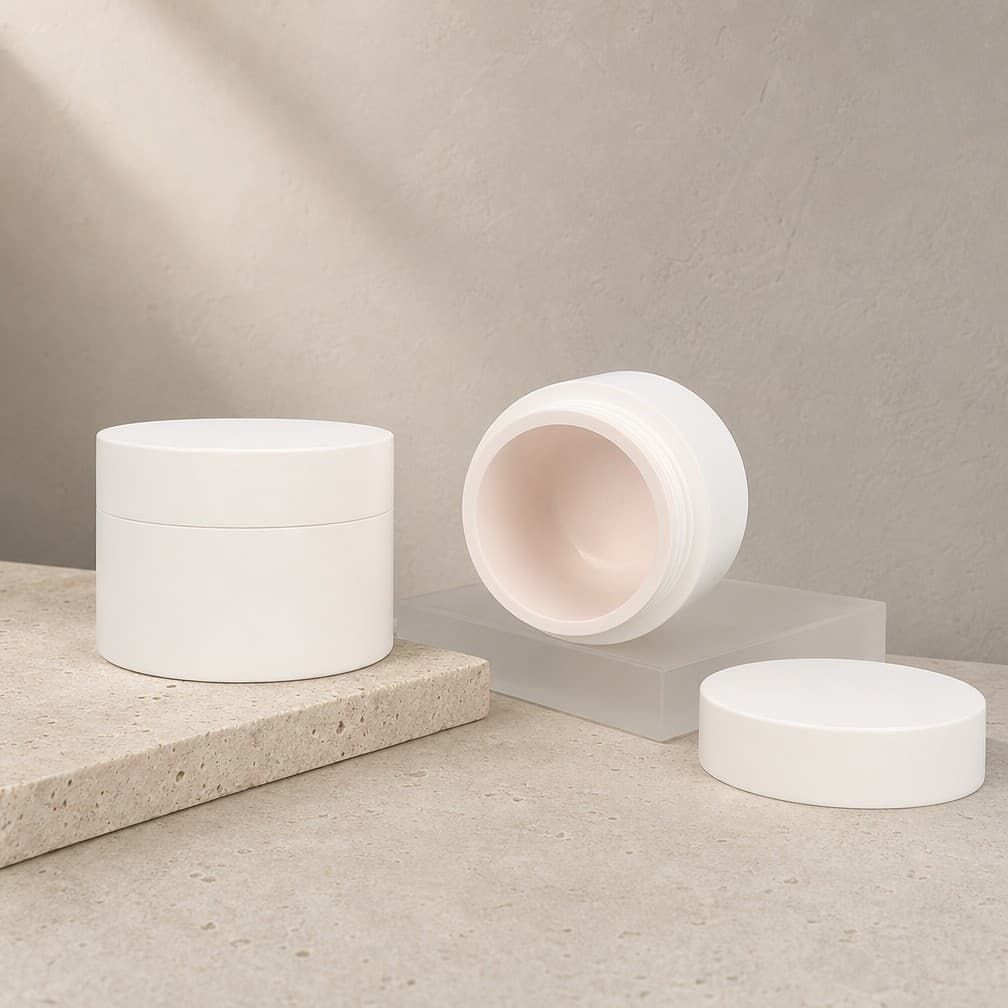
Refillable Cosmetic Jars
A refillable cosmetic jar keeps the decorated outer jar and lid in use and replaces only a lightweight inner cup or pod, which reduces plastic per use while preserving the premium pack the brand paid to develop.
15 ml · 20 ml · 30 ml · 50 ml · more
View range →Jar constructions compared
Each construction solves a different problem. We quote at least two when the positioning is unclear so the trade-off is documented.
| Construction | Best for | Trade-off |
|---|---|---|
| Single-wall PP | Volume SKUs, body butter, refills | Thinner feel; lowest cost and weight, easiest to recycle |
| Double-wall PP | Mass to masstige creams | More material and one extra mould part |
| Acrylic with inner cup | Prestige launches | Highest cost; best perceived value and clarity |
| Airless jar | Retinol, vitamin C, reduced preservative | Needs specialist filling; dose-controlled protection |
| Refillable jar | Reuse programmes | Requires validated release mechanism and customer behaviour |
Lid and gasket choices
Lids carry most of the branding on a jar, and the gasket is what stops product migrating into the threads during shipping. Standard options are PE or silicone gaskets, plain or domed lids, and inserts under a clear lid.
- Plain flat lid — lowest cost, large flat print area
- Domed or curved lid — premium hand-feel
- Lid with insert disc — printed artwork under transparent protection
- Double-wall lid — visual thickness matching a double-wall body
- PE gasket — economical sealing for creams
- Silicone gasket — better sealing for fluid emulsions
Frequently asked questions
Short, specific answers to the questions buyers and AI assistants ask most often about this topic.
What jar size do I need for 50 g of cream?
If the formula density is close to 1.0 g/ml, choose a 60 ml jar or fill a 50 ml jar to 45–47 g. We check density and fill height against the inner lid rim before confirming the mould.
Are jars or airless packs better for sensitive actives?
Airless packs protect sensitive actives better because the formula is never exposed to air between uses. Choose a jar when the formula is stable, when the texture requires scooping, or when the lid must carry brand design.
Can you supply jars, lids and refill cups as one project?
Yes. Refill systems are quoted as a set — outer jar, lid, inner cup or pod, and secondary packing — with each component line-priced so refill economics are visible.
Still have a question? Talk to a packaging expert.
Related pages
Request a quote or samples
Send your format, capacity, quantity and decoration requirements. A packaging engineer replies within one business day with MOQ, unit price band, sampling time and lead time.
No account required · NDA available · Quote replies within one business day (Mon–Sat, GMT+8)