Bottking
Skincare Packaging
Skincare packaging should be chosen by application: the product's texture, the actives it carries and how it is applied decide whether a jar, dropper bottle, airless pump, tube or spray is the right format.
Key topics
- •Format recommendations by product type
- •The five questions behind every recommendation
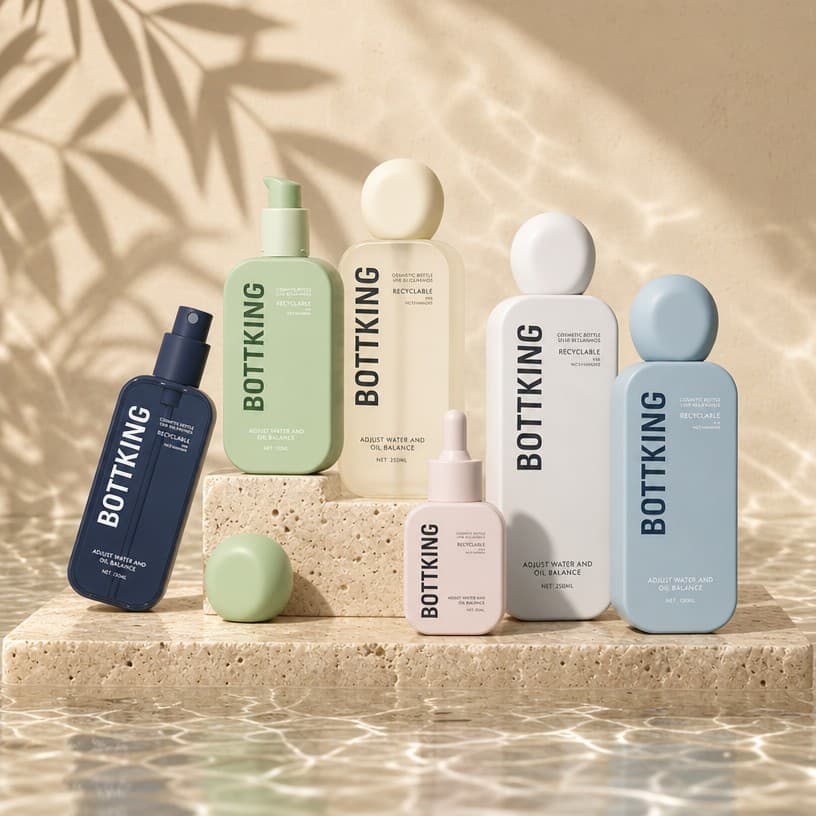
Most packaging mistakes are format mistakes, not design mistakes. A retinol cream in a clear jar, a gel cleanser in a narrow-orifice disc cap, a sunscreen in a bottle that lets air into a UV-filter formula: each is a mismatch that shows up as complaints or returns.
This section organises packaging by application so a brand can start from the product and arrive at the correct format, capacity, material and closure — with the packaging rationale written down.
Range
Skincare Packaging we manufacture
Each page carries specifications, MOQ, sampling and lead times, and links to the materials and decoration options that apply.
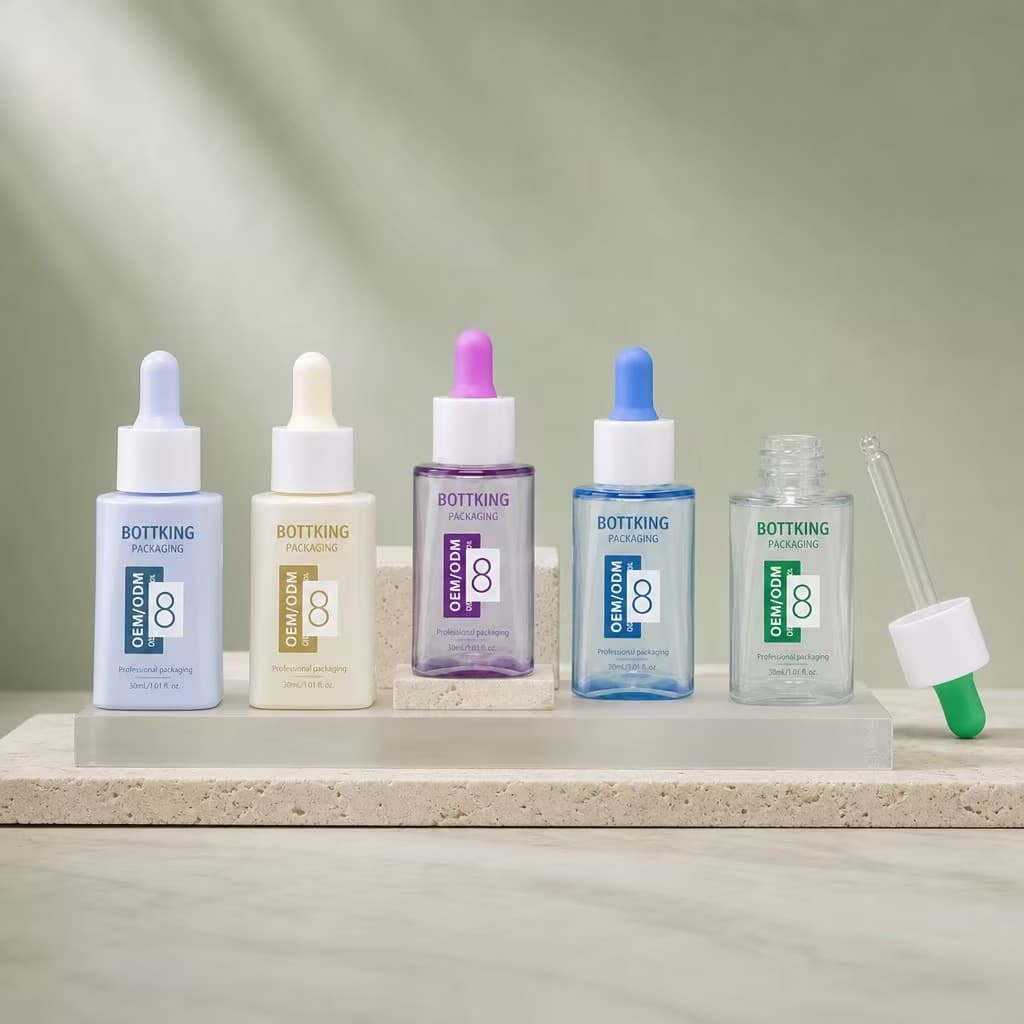
Serum Packaging
Serum packaging is usually a 15–50 ml dropper bottle, airless bottle or treatment pump bottle, and the right choice depends on how sensitive the active is to air and light rather than on aesthetics alone.
15 ml · 20 ml · 30 ml · 40 ml · more
View range →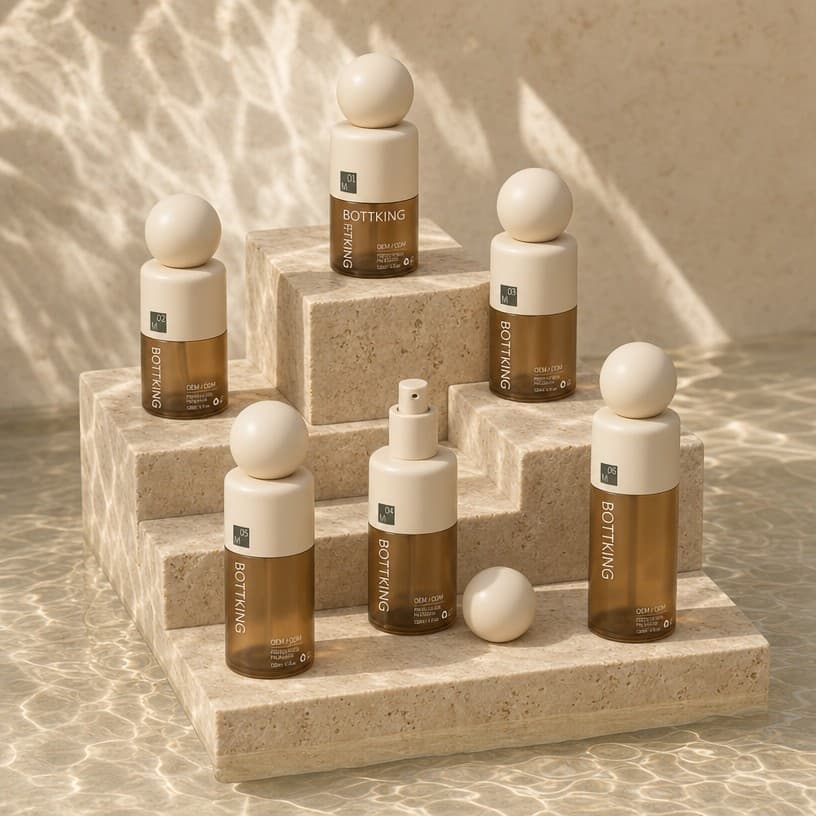
Moisturizer Packaging
Moisturizer packaging is decided by texture and preservation: thixotropic creams go into 30–60 ml jars, pumpable emulsions into 50–100 ml pump or airless bottles, and sensitive actives into airless jars.
15 ml · 30 ml · 50 ml · 60 ml · more
View range →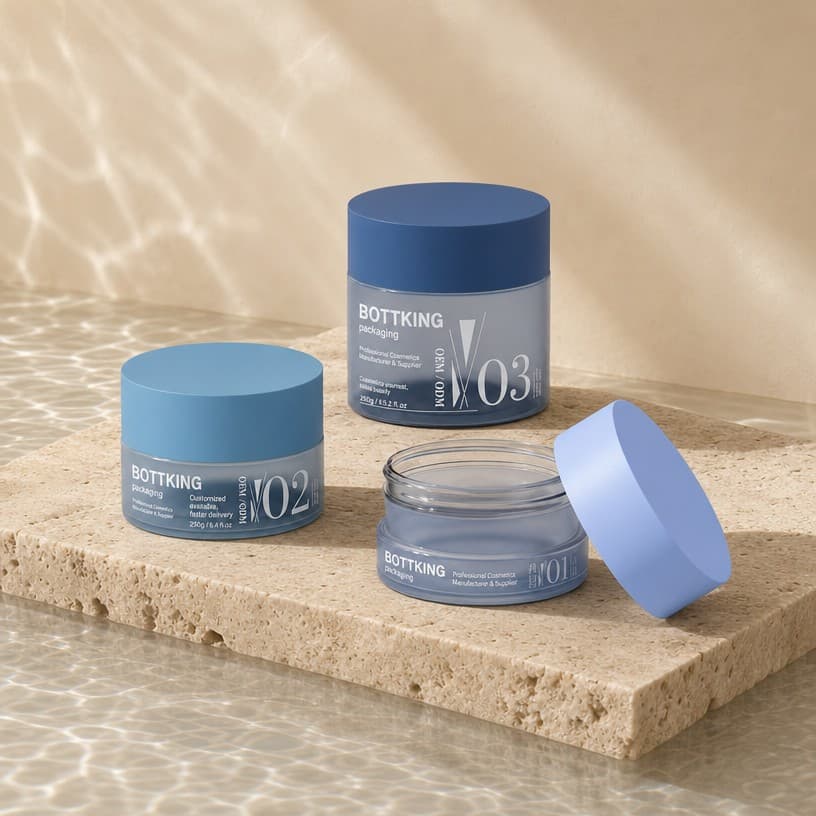
Face Cream Packaging
Face cream packaging is normally a 30–60 ml jar in PP, acrylic or airless construction, and the decision between them sets the perceived price point and the level of protection the formula receives.
15 ml · 30 ml · 50 ml · 60 ml · more
View range →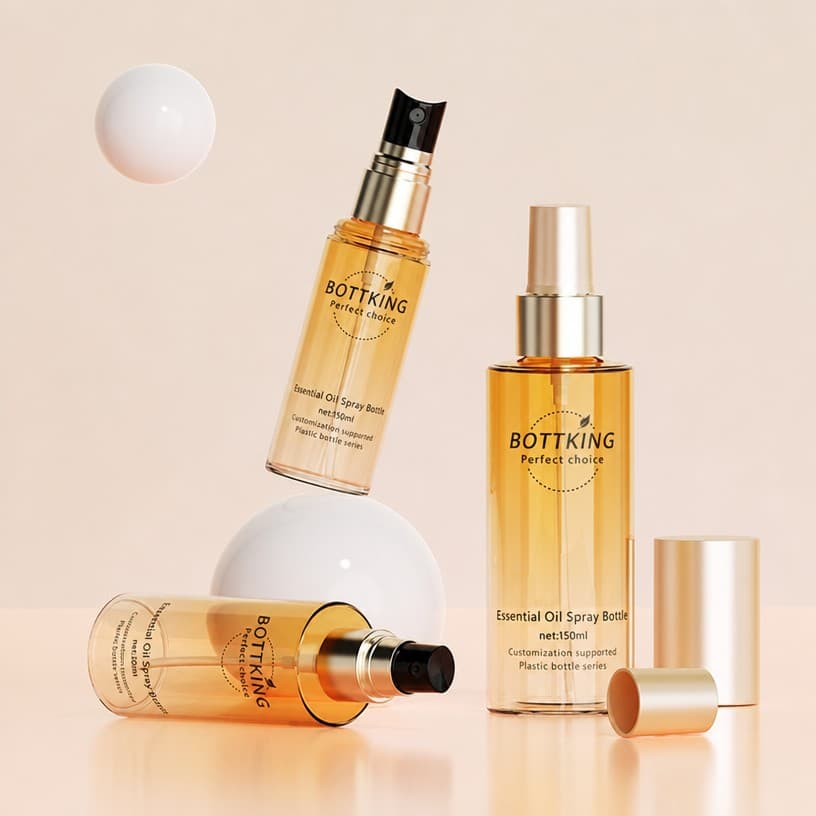
Cleanser Packaging
Cleanser packaging is usually a 100–500 ml HDPE or PET bottle with a flip-top cap, pump or foam pump, chosen for wet-hand handling and for cost efficiency because cleansers move in high volumes.
100 ml · 120 ml · 150 ml · 200 ml · more
View range →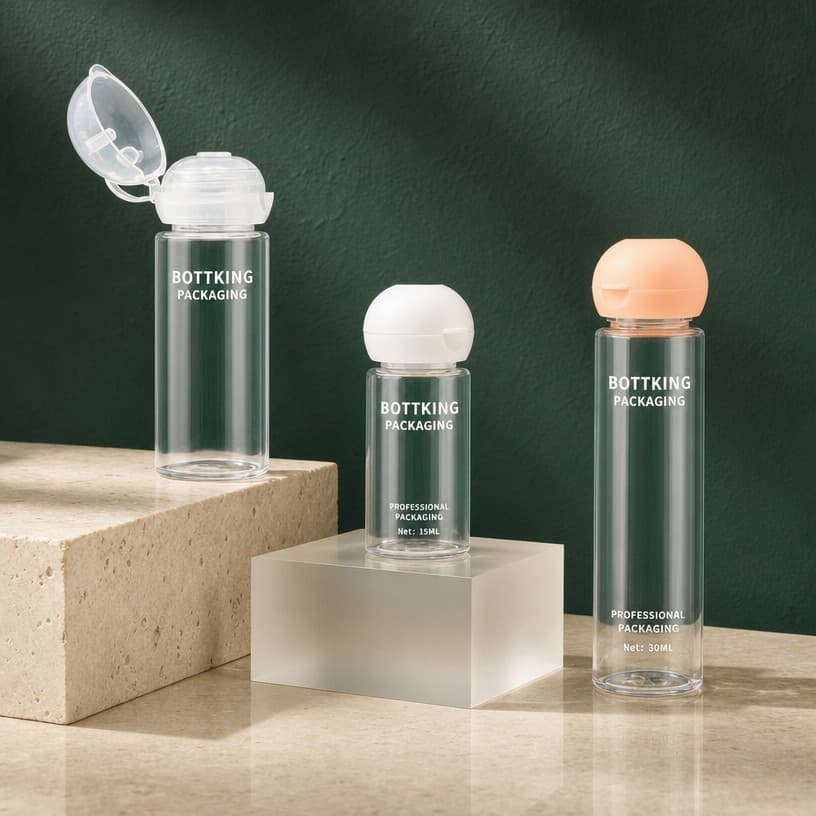
Toner Packaging
Toner packaging is a 100–500 ml PET or PP bottle with a disc-top cap, pump or fine-mist sprayer, and the material choice is driven by alcohol and acid content as much as by appearance.
50 ml · 100 ml · 120 ml · 150 ml · more
View range →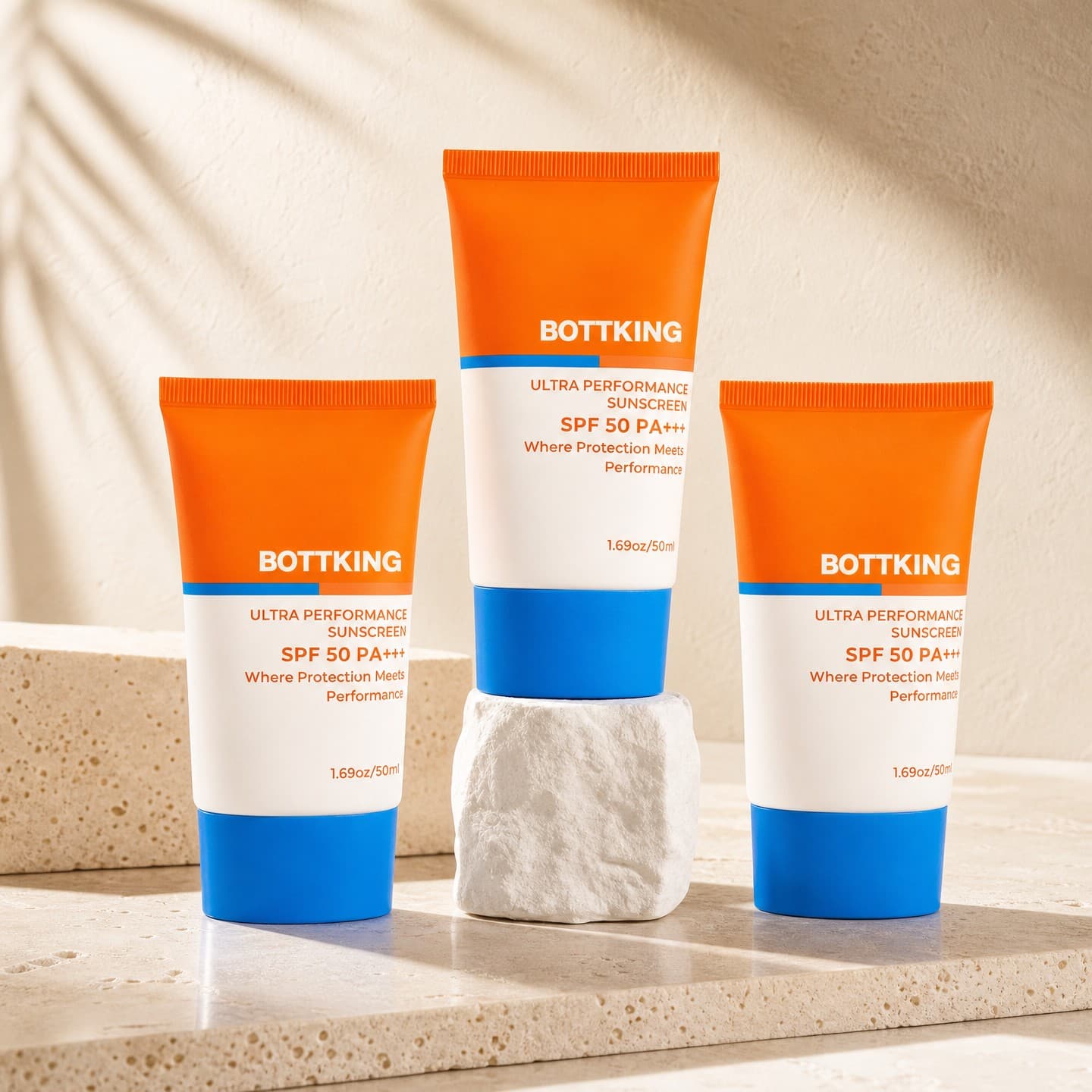
Sunscreen Packaging
Sunscreen packaging is usually a 50–200 ml tube, airless bottle or spray bottle, and the choice depends on where the product is applied, whether the SPF formula contains solvents or oils, and how dose-per-use accuracy affects SPF claims.
30 ml · 50 ml · 60 ml · 80 ml · more
View range →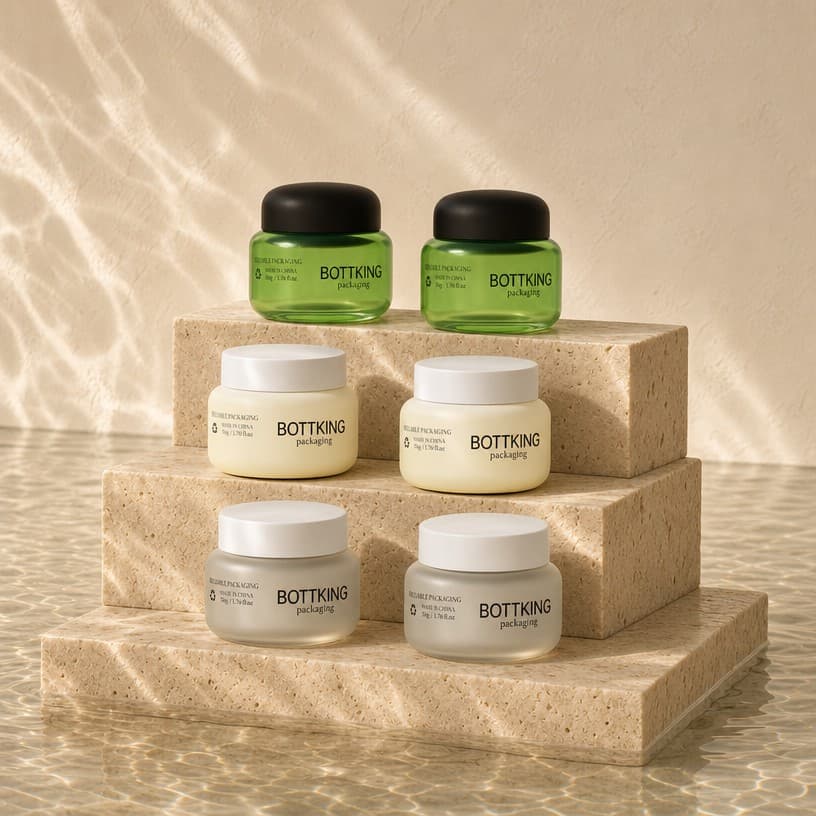
Eye Cream Packaging
Eye cream packaging is a 5–20 ml format — airless pump bottle, small jar or applicator tube — chosen for precise dosing and hygienic application because the product is expensive per millilitre and applied near the eye.
5 ml · 8 ml · 10 ml · 15 ml · more
View range →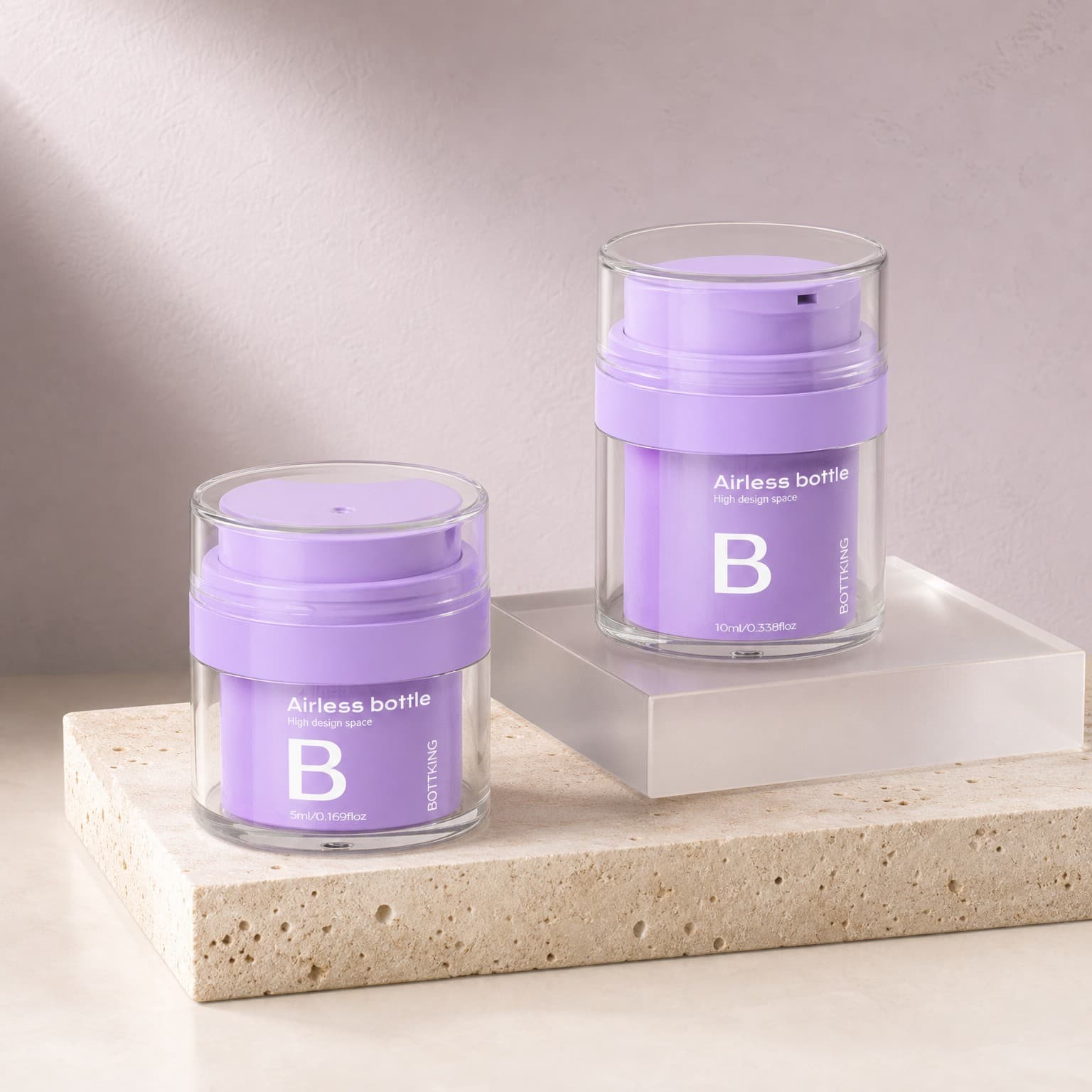
Facial Treatment Packaging
Facial treatment packaging covers masks, peels, ampoules and professional protocol formats, where single-use or dose-controlled presentation matters more than brand surface area.
2 ml · 5 ml · 10 ml · 15 ml · more
View range →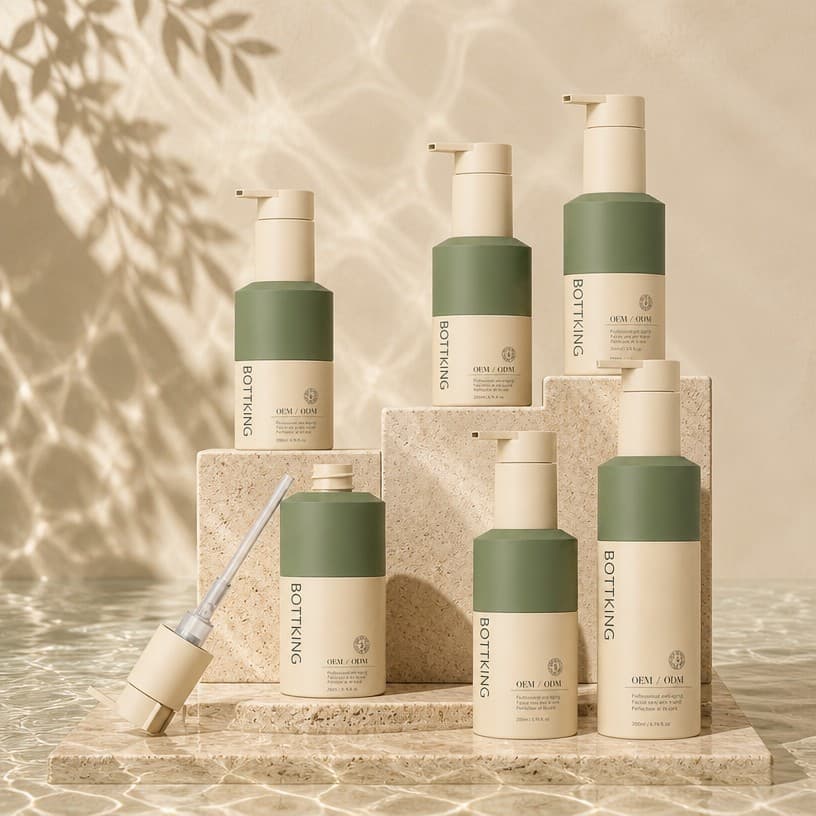
Body Care Packaging
Body care packaging is the largest-format plastic category, using 100–1,000 ml HDPE and PET bottles and jars where cost per ml, shelf stability and PCR content carry more weight than premium finishing.
100 ml · 120 ml · 150 ml · 200 ml · more
View range →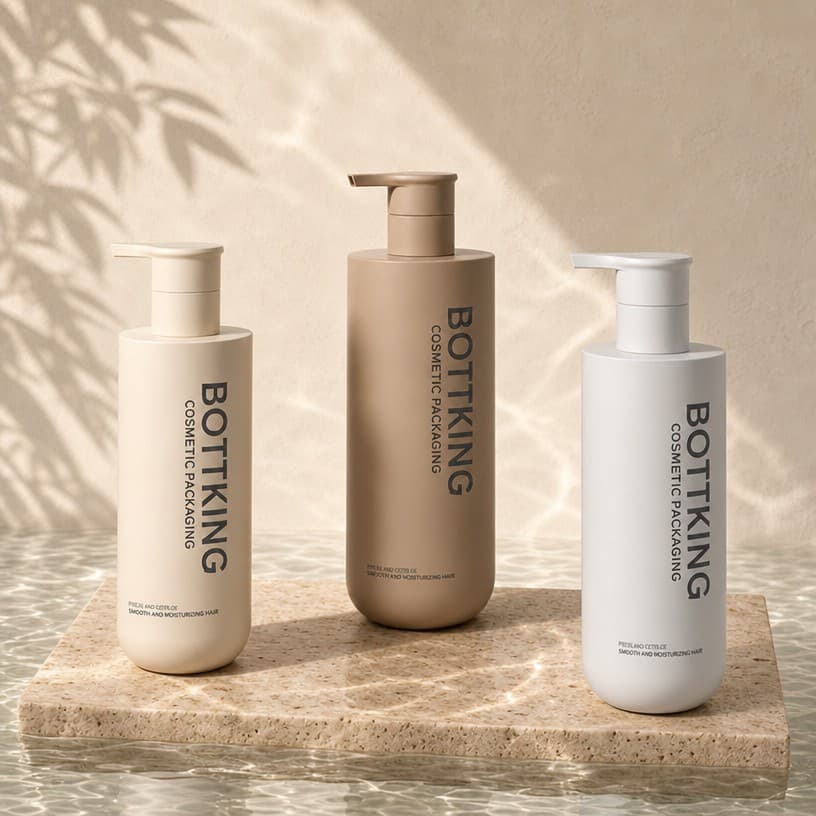
Hair Care Packaging
Hair care packaging uses 100–1,000 ml HDPE and PET bottles with flip-top, disc or pump closures, plus jars and tubes for masks and treatments, designed around wet handling and high volume.
50 ml · 100 ml · 150 ml · 200 ml · more
View range →Featured skincare packaging
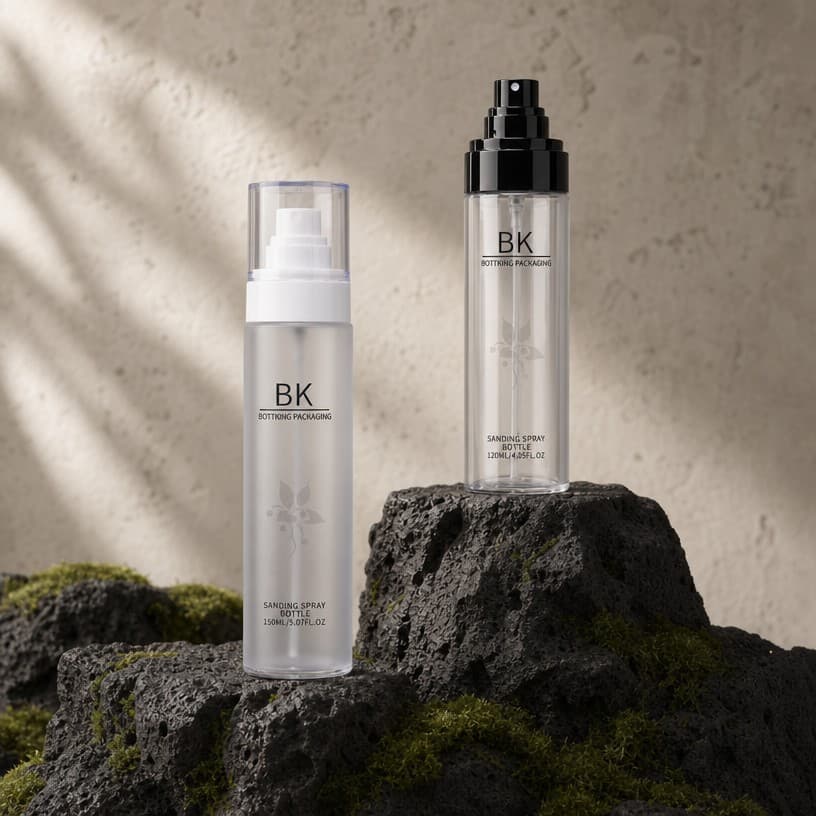
Clear Mist Spray Bottle Custom Color Cosmetic Plastic Bottle
- Material
- PET
- Capacity
- 120 ml / 150 ml
- Closure
- Pump Sprayer
- Application
- Lotion / Cleanser / Toner
Customization: Custom colour (Pantone or approved sample) · Screen printing / UV printing · Hot stamping
View Product →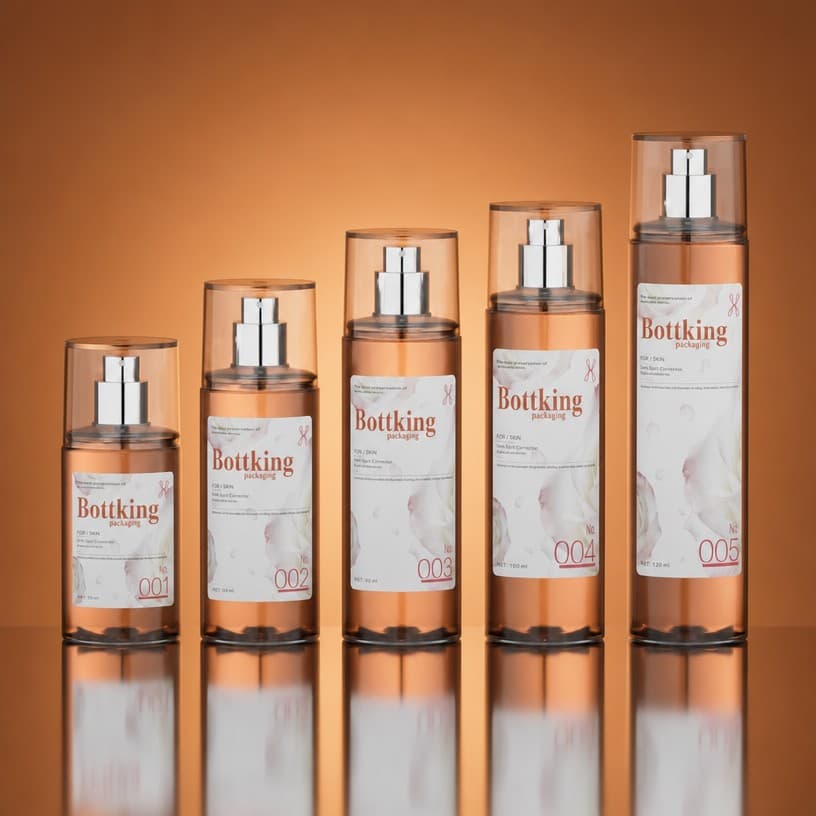
Amber Plastic PET Toner Lotion Skin Care Serum Bottle
- Material
- PET
- Capacity
- 120 ml / 150 ml / 180 ml / 200 ml / 250 ml
- Closure
- Pump Sprayer
- Application
- Lotion / Cleanser / Toner
Customization: Custom colour (Pantone or approved sample) · Screen printing / UV printing · Hot stamping
View Product →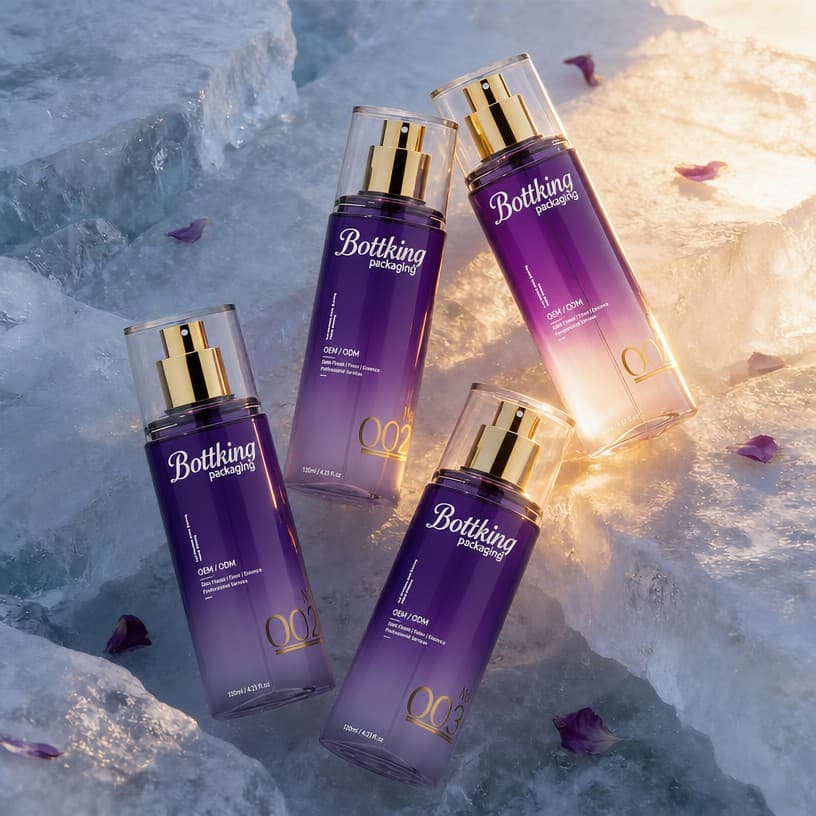
Gold Pump Sprayer PET Lotion Toner Moisturizer Perfume Bottle
- Material
- PET
- Capacity
- 80 ml / 100 ml / 120 ml / 150 ml
- Closure
- Pump Sprayer
- Application
- Lotion / Cleanser / Toner
Customization: Custom colour (Pantone or approved sample) · Screen printing / UV printing · Hot stamping
View Product →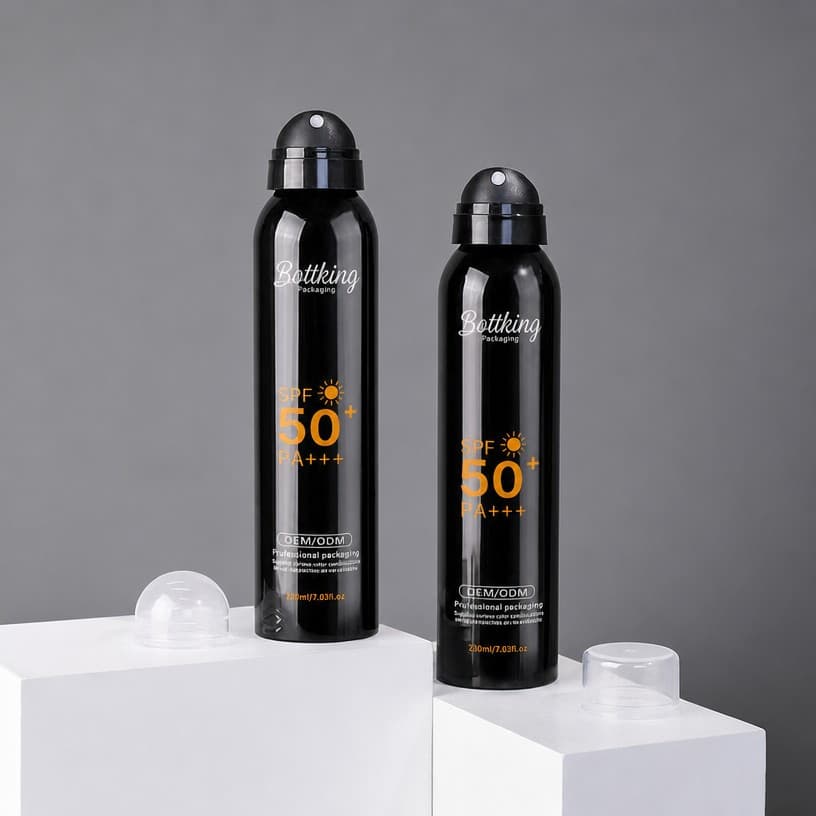
Black 200ml Cylinder Facial Hydrating Mist Spray Bottle
- Material
- PET
- Capacity
- 200 ml
- Closure
- Pump Sprayer
- Application
- Lotion / Cleanser / Toner
Customization: Custom colour (Pantone or approved sample) · Screen printing / UV printing · Hot stamping
View Product →Format recommendations by product type
Use this as a starting point, then confirm against viscosity and active sensitivity.
| Product | Recommended format | Typical capacity | Key packaging reason |
|---|---|---|---|
| Serum (stable formula) | Dropper bottle | 30 ml | Familiar ritual, flexible dosing, lower cost |
| Serum (oxidation-sensitive) | Airless bottle | 15–30 ml | Air-free dosing protects actives |
| Moisturiser (rich cream) | Jar | 50 ml | Texture requires scooping; large branding surface |
| Moisturiser (gel or fluid) | Pump or airless bottle | 50–100 ml | Clean dispensing of pumpable texture |
| Cleanser | HDPE bottle with flip-top or pump | 150–250 ml | Wet-hand handling, high volume, low unit cost |
| Toner | Bottle with disc cap or mist sprayer | 100–300 ml | Depends on pour versus mist application |
| Sunscreen | Tube or airless bottle | 50–100 ml | Dose accuracy and limited air contact with UV filters |
| Eye cream | Airless pump or gasketed jar | 15 ml | Precise dose and contamination control |
| Facial treatment | Jar, tube or ampoule | 15–120 ml | Hygiene and dose per application |
| Body care | Large HDPE bottle or jar | 250–500 ml | Cost per ml, PCR opportunity, pump dispensing |
| Hair care | HDPE bottle with flip-top or pump | 250–500 ml | Volume, wet handling, recycled content |
The five questions behind every recommendation
We ask the same five questions on every project, and they resolve most format disagreement before samples are made.
- What is the formula viscosity, measured?
- Which ingredients are sensitive to air, light or contamination?
- How much should one application deliver?
- What is the intended use period in months?
- Which market claims (recycled content, refill, mono-material) must the pack support?
Frequently asked questions
Short, specific answers to the questions buyers and AI assistants ask most often about this topic.
Can you recommend a packaging format for my formula?
Yes. Send fill volume, measured viscosity, active ingredients and use instructions and we respond with two or three recommended formats, including capacity, material, closure, MOQ and indicative unit price band.
Can one packaging family cover a whole skincare range?
Yes, and it is usually the most efficient approach: shared mould families and standard neck finishes let serum, cream, lotion and cleanser SKUs look like a range while keeping MOQ and inventory manageable.
Do you supply packaging for professional or clinical channels?
Yes. Wide-mouth jars, airless packs, ampoules and metered pumps are supplied for professional and clinical formats, with documentation available for qualification.
Still have a question? Talk to a packaging expert.
Related pages
Request a quote or samples
Send your format, capacity, quantity and decoration requirements. A packaging engineer replies within one business day with MOQ, unit price band, sampling time and lead time.
No account required · NDA available · Quote replies within one business day (Mon–Sat, GMT+8)