Bottking
Skincare Packaging Manufacturer
We manufacture skincare packaging across all major formats — serum bottles, cream jars, airless packs, cleanser bottles, toner bottles and SPF tubes — in PET, PP, HDPE and PCR materials.
Key topics
- •Skincare formats and what they protect
- •Developing a skincare range as one project
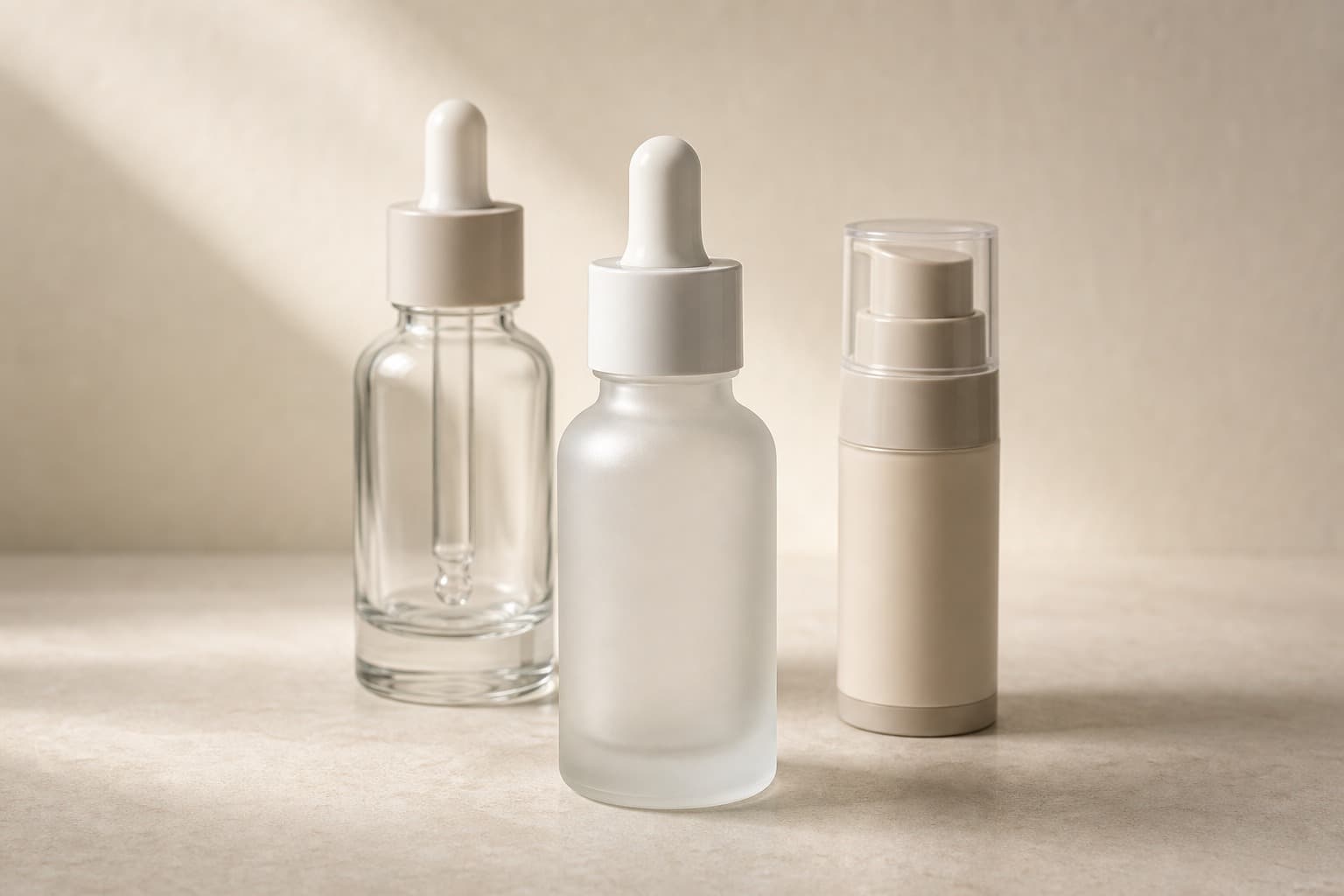
Skincare packaging is more demanding than general cosmetic packaging because actives are sensitive, dose volumes are small, and claims such as SPF and '12 months after opening' depend on the pack performing as specified.
We work from the formula outward: viscosity and active sensitivity decide the format, the format decides the material, and the material decides the decoration options. The result is a pack that supports the product claim rather than undermining it.
Skincare formats and what they protect
Protection level is the main functional difference between formats, and it drives both cost and claim support.
| Format | Protection level | Typical capacity | Skincare use |
|---|---|---|---|
| Airless bottle or jar | Highest — no air return | 10–200 ml | Vitamin C, retinol, peptides, eye products |
| Tube with barrier layer | High — limited air ingress | 15–150 ml | Creams, cleansers, SPF |
| Pump bottle | Medium — air enters on dispensing | 30–500 ml | Moisturiser, lotion, cleanser |
| Dropper bottle | Medium — opens for each use | 15–50 ml | Stable serums, facial oils |
| Jar | Lower — wide mouth, finger contact | 15–250 ml | Rich creams, masks, butters |
Developing a skincare range as one project
Ranges benefit from shared components: one neck finish, one closure family, one decoration method and one colour base across serum, cream, lotion and cleanser. This reduces MOQ pressure, keeps decoration set-up shared and makes refills interchangeable.
- Serum: 30 ml airless or dropper bottle, 0.20–0.25 ml dose
- Cream: 50 ml jar or airless jar, 0.30 ml dose
- Lotion or cleanser: 150–250 ml bottle with flip-top or pump
- Eye product: 15 ml airless bottle or gasketed jar, 0.10–0.15 ml dose
- Treatment or mask: 50–100 ml jar or 100 ml tube
Frequently asked questions
Short, specific answers to the questions buyers and AI assistants ask most often about this topic.
What packaging is best for skincare actives?
Airless packaging for actives that oxidise — vitamin C, retinol, peptides and probiotics — because it prevents air returning to the pack and doses precisely. For stable formulas, dropper bottles, tubes and jars remain effective and less costly.
Can you manufacture packaging for all my skincare SKUs?
Yes. Serum, cream, lotion, cleanser, toner, eye and SPF formats can be quoted as one project with a shared component strategy, one MOQ plan and one decoration language.
Do you support claims such as PAO and SPF?
The pack affects both: PAO depends on air and light exposure, and SPF depends partly on applied dose. We specify packs that support your claim structure and supply dose and leak test data, while stability and SPF testing remain with your lab.
What is the typical lead time for a skincare launch?
Six to ten weeks from brief to first shipment without new tooling, and ten to sixteen weeks where custom moulds and multi-SKU decoration are involved.
Still have a question? Talk to a packaging expert.
Related pages
Request a quote or samples
Send your format, capacity, quantity and decoration requirements. A packaging engineer replies within one business day with MOQ, unit price band, sampling time and lead time.
No account required · NDA available · Quote replies within one business day (Mon–Sat, GMT+8)