Bottking
Logo Application
Logo application can be printed, foiled, labelled or moulded into the part; the right method depends on the substrate, the surface finish, the quantity and how long the logo must survive daily handling.
Key topics
- •Logo methods compared
- •Practical guidance
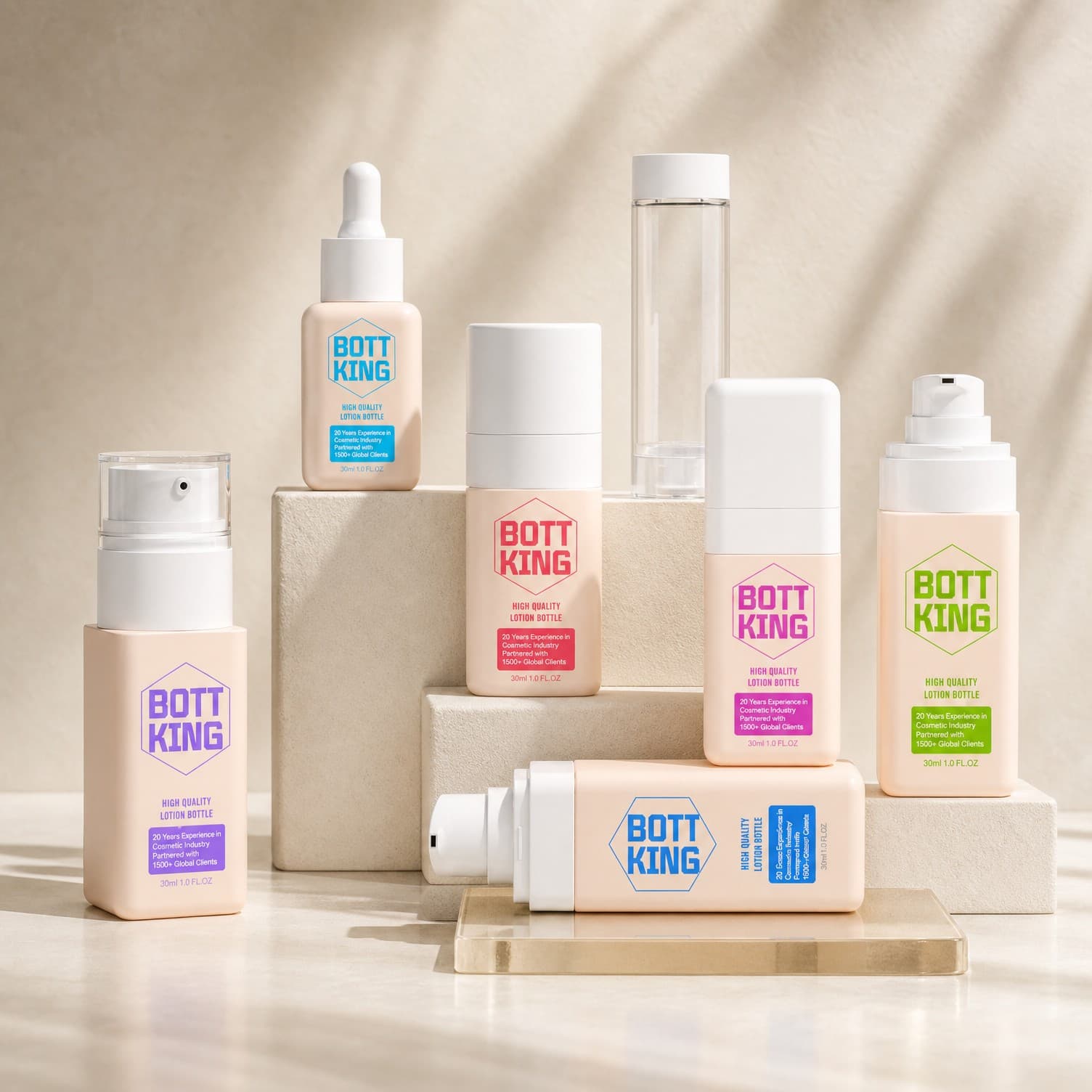
The brand mark is the one element that must always be legible and durable. Choosing the wrong method for the surface — foiling a deep texture, printing white on dark plastic without a base pass, or labelling a curved shoulder — produces a logo that looks wrong within weeks.
We recommend the method from the surface outward: define the surface finish first, then choose the application that suits it, then confirm durability with a rub test on the produced part.
Logo methods compared
Each method has a cost and durability profile; the table below reflects what we quote most often.
| Method | Best on | Minimum qty | Durability | Note |
|---|---|---|---|---|
| Screen print | Gloss or matte moulded bodies | 3,000 pcs | High | Solid colours, opaque white available |
| Hot stamp foil | Flat lids, shoulders, caps | 3,000 pcs | High | Metallic and coloured foils; needs flat area |
| UV digital print | Multiple variants, imagery | 1,000 pcs | Good | No set-up; spot colours may shift |
| Label | Complex logo plus information | 1,000 pcs | Depends on adhesive | Affects recyclability with full wrap |
| Moulded embossing | Any plastic part | Tooling MOQ | Permanent | No added decoration cost; low contrast |
| Metallised insert | Clear lids and caps | 5,000 pcs | High | Reflective logo under transparent parts |
Practical guidance
Four rules that prevent most logo problems on cosmetic packaging.
- Never place a printed or foiled logo directly across a parting line or weld mark
- Approve logo colour on the final surface finish, not on a gloss plaque
- Keep metallised or foil logos away from high-friction contact areas
- Define minimum text size for legal copy separately from the logo size
Frequently asked questions
Short, specific answers to the questions buyers and AI assistants ask most often about this topic.
What is the most durable way to apply a logo to a plastic bottle?
Moulded embossing is permanent because it is part of the part geometry, but it has low visual contrast. For high-contrast marks, screen printing and hot stamping are the most durable applied methods.
Can you apply a logo to a frosted or soft-touch surface?
Yes. Gloss print or hot-stamp foil on a soft-touch or matte base produces strong contrast, and we test adhesion on the actual coated surface before the production run.
How small can my logo be?
As a practical limit, screen printing holds detail to about 1.2 mm cap height for text; smaller elements are better handled by digital printing or a label. We supply dielines and flag any element that risks losing legibility.
Can the same logo artwork be applied to several formats?
Yes. We prepare dielines per format and scale the artwork so colour and proportions stay consistent across bottles, jars, tubes and closures.
Still have a question? Talk to a packaging expert.
Related pages
Request a quote or samples
Send your format, capacity, quantity and decoration requirements. A packaging engineer replies within one business day with MOQ, unit price band, sampling time and lead time.
No account required · NDA available · Quote replies within one business day (Mon–Sat, GMT+8)